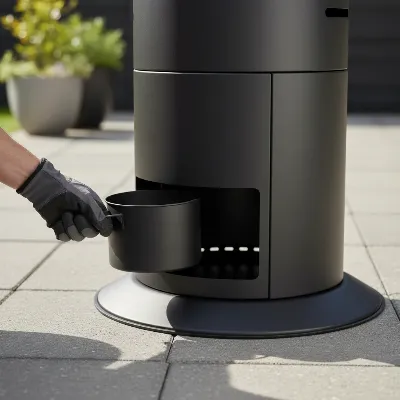
Extending the usability of your outdoor living space beyond the warmer months is a desire shared by many. The chill of an evening or the crisp air of autumn no longer need to signal the end of patio season. With the right heating solution, your deck or garden can remain a comfortable haven for relaxation and entertaining year-round. While high-end models can quickly break the bank, the good news is that numerous effective and reliable patio heaters are available for under $150, proving that warmth doesn’t have to come with a hefty price tag. This comprehensive guide, crafted from years of hands-on experience and technical expertise, will navigate you through the best budget-friendly patio heater options for 2026, helping you make an informed decision without compromising on comfort or safety.
Understanding Patio Heaters: Essential for Outdoor Comfort
Patio heaters are specialized appliances designed to provide supplemental heat to outdoor areas, transforming cool or chilly environments into inviting spaces. They work by emitting radiant heat, which directly warms people and objects rather than merely heating the surrounding air. This technology allows them to be effective even in open, breezy conditions where traditional space heaters would struggle. The evolution of patio heaters has seen a shift from rudimentary open flames to sophisticated gas and electric models, each offering unique advantages tailored to different needs and preferences. When selecting a patio heater, consider the size of your outdoor space, the available energy sources, the aesthetic style you prefer, and paramount safety features.
Types of Patio Heaters at a Glance
|
Our Picks for the Best Patio Heater in 2026
As an Amazon Associate I earn from qualifying purchases.
|
||
| Num | Product | Action |
|---|---|---|
| 1 | EAST OAK 55,000 BTU Propane Patio Heater with Round Table & Stainless Steel Burner, Outdoor Heater with Wheels, Ideal For Large Patios, Gardens, Outdoor Events, and Commercial Use, Bronze |

|
| 2 | EAST OAK 50,000 BTU Patio Heater with Sand Box, Table Design, Double-Layer Stainless Steel Burner, Wheels, Triple Protection System, Outdoor Heater for Home and Residential, Pinecone |
|
| 3 | EAST OAK 50,000 BTU Patio Heater for Outdoor Use With Round Table Design, Double-Layer Stainless Steel Burner and Wheels, Outdoor Patio Heater for Home and Commercial, Bronze, 31.9" x 31.9" x 86.6" |
|
| 4 | EAST OAK One-Hand Ignition Patio Heater with Enhanced Burner Head, 50,000 BTU Propane Outdoor Heater, One-Person Install, Round Table Design for Porch, Garden, Balcony, Backyard |
|
| 5 | 50,000 BTU Patio Heater - Propane Patio Heater with Sand Box, Double-Layer Stainless Steel Burner, Round Table Design Space Heater, Outdoor Heaters with Wheels for Garden and Patio, Brown |
|
| 6 | Patio Heater for Outdoor Use, Infrared Electric Outdoor Heater, 1500W Instant Heating, 60-Degree Oscillation, 9 Heat Levels, 9H Timer, Remote, for Garage, Backyard, Large Room, Indoor, 32.2", White |
|
| 7 | EAST OAK 50,000 BTU Patio Heater for Outdoor Use with Round Table Design, Double-Layer Stainless Steel Burner, Wheels, Triple Protection System, Outdoor Heater for Home and Residential, Black |
|
| 8 | VEVOR 50000BTU Propane Patio Heater for Outdoor Use, Tall Hammered With Round Table Design, Metal Burner and Wheels, Fixed Flame Heater for Party, Backyard, Garden, Bronze |
|
| 9 | Amazon Basics 46,000 BTU Portable Outdoor Propane Patio Heater with Wheels, Commercial & Residential with Water Tank, Adjustable Heat Output, 9-Foot Radius, Slate Gray, 32.1"L x 32.1"W x 91.3"H |
|
| 10 | 50,000 BTU Patio Heater - Propane Patio Heater with Sand Box, Double-Layer Stainless Steel Burner Space Heater, Outdoor Heaters with Wheels, Used for Garden, Patio and Residential, Brown |
|
The market primarily offers two main types of patio heaters: propane and electric. Each category boasts various designs and functionalities, making it crucial to understand their distinct characteristics, especially when shopping within a strict budget. For under $150, you’ll typically find freestanding propane models, compact tabletop propane units, and wall-mounted or freestanding electric infrared heaters.
Propane Patio Heaters: Power and Portability
Propane patio heaters are a popular choice for their ability to deliver substantial heat output and their excellent portability. These units typically run on standard 20-pound propane tanks, similar to those used for barbecues, allowing them to be placed almost anywhere without the need for an electrical outlet. This makes them ideal for larger, open patios or areas where mobility is key.
-
Pros:
- High Heat Output: Many propane models, even budget-friendly ones, can produce up to 46,000 BTUs, effectively warming sizable areas.
- Portability: Equipped with wheels, freestanding propane heaters can be easily moved to different spots as needed.
- Instant Warmth: Propane heaters provide immediate heat once ignited.
- Independence from Outlets: Freedom to position the heater away from electrical connections.
-
Cons:
- Fuel Management: Requires regular propane tank refills or exchanges, incurring ongoing costs and logistical effort.
- Weight: Can be heavy, especially with a full propane tank, despite having wheels.
- Emissions: Produces carbon dioxide during operation.
- Assembly: Often requires some assembly out of the box.
-
Safety Considerations: Most propane heaters include essential safety features such as an auto shut-off tilt valve, which cuts off the gas supply if the unit tips over. It’s also vital to perform regular leak tests and ensure the propane tank is securely fastened within the heater’s base. Never operate a propane heater indoors or in poorly ventilated enclosed spaces.
Electric Patio Heaters: Convenience and Cleanliness
Electric patio heaters offer a convenient, clean, and often quieter alternative, particularly well-suited for smaller, more enclosed, or covered outdoor spaces. These heaters plug into a standard electrical outlet and typically use infrared technology to emit radiant heat, which is highly efficient as it directly warms people and objects.
-
Pros:
- Clean Operation: Produces no emissions or open flames, making them an environmentally friendlier option.
- Quiet: Operate silently, preserving the tranquility of your outdoor setting.
- Low Maintenance: Generally require minimal upkeep, with no fuel tanks to monitor or refill.
- Quick Heating: Provide immediate warmth upon activation.
- Versatile Installation: Available as freestanding, tabletop, wall-mounted, or ceiling-mounted units.
-
Cons:
- Limited Heating Radius: Generally warm a smaller, more concentrated area compared to high-BTU propane heaters.
- Dependence on Outlets: Requires access to an electrical outlet, which can limit placement options.
- Operating Costs: Can have higher running costs depending on local electricity rates, although upfront costs are often lower.
- Aesthetics: Some budget models may have a more industrial look.
-
Safety Considerations: Electric heaters are generally considered very safe due to the absence of an open flame and combustion byproducts. Always use them with grounded outlets and ensure the unit is weatherproof if exposed to elements. Wall or ceiling-mounted options are particularly safe for families with children or pets as they are kept out of reach.
Top Budget-Friendly Patio Heaters Under $150 for 2026
Finding a high-performing patio heater that fits a sub-$150 budget in 2026 is entirely possible. Several models consistently receive high marks for their balance of affordability, efficiency, and reliable heating. Here are some of the standout options:
AmazonBasics 46,000 BTU Outdoor Propane Patio Heater
This robust freestanding propane heater has long been a top contender in the budget category. It’s known for its impressive heat output and durable construction, making it an excellent choice for those needing to warm a significant outdoor area.
- Key Features: Boasts a powerful 46,000 BTU output, powered by a standard 20-pound propane tank. It features durable stainless steel construction for weather resistance, a simple Piezo ignition system for easy startup, and adjustable heat settings. Built-in wheels enhance its portability across your patio or deck.
- Why it’s a Top Pick: For its price point, the AmazonBasics unit delivers exceptional heating power, rivaling more expensive models. Its sturdy design ensures longevity, and the mobility features add practical convenience for various outdoor layouts.
- Considerations: Some users find the process of installing the propane tank cumbersome due to the lack of a dedicated access door. Additionally, the control knob is located at the top of the unit, which might require shorter individuals to stretch to reach.
Westinghouse Infrared 1500 Watt Electric Patio Heater
For those seeking an electric solution, the Westinghouse Infrared 1500 Watt Electric Patio Heater offers a compelling package for smaller or more defined spaces. It’s an excellent “fuss-free” option that avoids propane tank management.
- Key Features: Operates at 1500 watts, utilizing infrared technology for efficient heating. Its weatherproof design allows for safe use in various outdoor settings, including screened-in porches or patios with overhangs. It’s lightweight and heats up quickly.
- Why it’s a Top Pick: Ideal for targeted heating in compact areas, this heater is celebrated for its ease of use (just plug and play) and quiet operation. Its compact footprint also makes it suitable for spaces where larger units might be intrusive.
- Considerations: While efficient for its size, its heating radius is shorter compared to high-BTU propane models, meaning it’s best for smaller gatherings or close proximity heating.
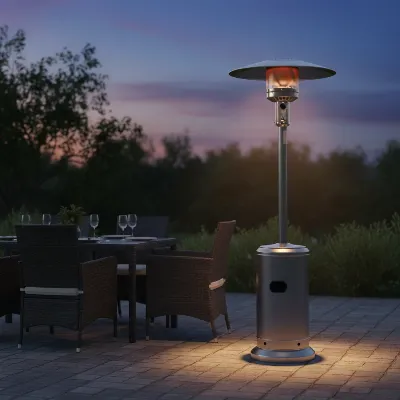 A powerful AmazonBasics 46,000 BTU propane patio heater warming an outdoor dining area at dusk.
Dr. Infrared Heater DR-238
If your outdoor space is covered or semi-enclosed, the Dr. Infrared Heater DR-238 provides an effective and safe heating solution that keeps floor space clear. This wall or ceiling-mounted unit is a favorite for its performance and safety aspects.
- Key Features: An electric infrared heater with adjustable wattage settings (900, 1200, and 1500 watts). It comes with a convenient remote control and is designed to be mounted on a wall or ceiling, directing clean, instant warmth directly to people and objects.
- Why it’s a Top Pick: Its primary advantage lies in its discreet, out-of-reach placement, making it exceptionally safe for environments with children and pets. It provides efficient, radiant heat for covered patios and works well as a supplementary heat source.
- Considerations: While rated to cover a substantial area, user experiences suggest it performs best in smaller, more contained spaces. Its design is more functional than decorative, which might not appeal to everyone seeking a stylish patio centerpiece.
Cuisinart Portable Tabletop Patio Heater
For intimate settings or small outdoor dining tables, the Cuisinart Portable Tabletop Patio Heater offers a compact and highly portable solution. It’s designed for close-range warmth without occupying valuable floor space.
- Key Features: A compact propane-powered unit delivering 11,000 BTUs. It features a sleek stainless steel body, push-button ignition, and a weighted base for stability. Its lightweight design makes it easy to move for various occasions.
- Why it’s a Top Pick: This heater is perfect for creating a warm ambiance around a small dining table or seating area. Its portability means you can easily store it away or even take it on camping trips.
- Considerations: Due to its lower BTU output and tabletop design, it’s suitable only for very small, localized heating zones and won’t warm a larger patio effectively.
Comparing Budget Patio Heaters: Gas vs. Electric
Deciding between a gas and an electric patio heater, especially within a budget, involves weighing several factors. The table below offers a detailed comparison to help you align a heater’s capabilities with your specific outdoor heating needs.
| Feature | Propane Patio Heater (e.g., AmazonBasics) | Electric Patio Heater (e.g., Westinghouse, Dr. Infrared) |
|---|---|---|
| Performance | High (40,000 – 48,000 BTU) | Moderate (1500W, roughly 5,100 BTU equivalent) |
| Area Coverage | Large, open spaces (up to 200 sq ft) | Smaller, enclosed/covered spaces (up to 100 sq ft) |
| Upfront Cost | Often slightly higher for high BTU units | Generally lower for entry-level models |
| Operating Cost | Varies with propane prices, often higher per hour | Varies with electricity rates, can be higher long-term |
| Portability | Excellent (freestanding with wheels) | Very good (lightweight, some mounted) |
| Safety | Tilt shut-off, leak checks, outdoor use only | No open flame, quiet, can be mounted out of reach |
| Environmental | Produces emissions | No direct emissions |
| Best Use Case | Large patios, open-air gatherings, flexible placement | Small balconies, covered porches, fixed spots |
Your Guide to Buying the Right Budget Patio Heater
Making the best choice for your outdoor space involves more than just picking the cheapest option. A strategic approach will ensure your budget-friendly patio heater truly meets your needs.
Assess Your Outdoor Space and Needs
Before you even start looking at models, take stock of your specific situation:
- Size of the Area to Heat: A sprawling deck will benefit more from a powerful propane heater, while a small balcony or a cozy reading nook might be perfectly served by a compact electric or tabletop unit.
- Frequency of Use: If you plan to use it daily, operating costs become a more significant factor. Occasional use might prioritize upfront cost.
- Access to Power Source: Do you have readily available outdoor electrical outlets? Are you willing to manage propane tanks? This heavily influences the type of heater suitable for you.
- Local Climate: How cold does it typically get? For extremely chilly conditions, a higher BTU propane heater might be necessary, even if it stretches the budget.
- Overall Budget: Remember to consider not just the initial purchase price but also the ongoing costs of fuel (propane) or electricity.
Key Features to Look For
Even in the budget category, certain features can significantly enhance your experience and safety:
- Heat Output (BTU/Wattage): Match the heater’s power to the size of the area you intend to warm. More BTUs for larger spaces, fewer for smaller, more intimate zones.
- Safety Features: A tilt shut-off valve is non-negotiable for propane units. Look for stable bases and weatherproof designs for all outdoor heaters. For electric models, ensure they are rated for outdoor use and have proper grounding.
- Durability and Material: Stainless steel or powder-coated finishes offer better weather resistance and longevity against rust and corrosion, especially important for budget models that might otherwise skimp on material quality.
- Portability: If you need to move the heater frequently, look for models with sturdy wheels (for freestanding units) or lightweight designs (for tabletop/mounted options).
- Controls and Ignition: Easy-to-use controls, reliable ignition (like Piezo ignition for gas), and adjustable heat settings are desirable for convenience and comfort. Some electric models offer remote controls, a nice bonus.
Where to Buy and What to Expect
Budget patio heaters are widely available from major online retailers such as Amazon, Wayfair, and Home Depot. When purchasing, always check recent customer reviews to gauge real-world performance and reliability. Verify the warranty information and understand the return policy. While under $150, you might not get all the bells and whistles of premium models, but you can certainly find durable, effective heaters that provide considerable warmth.
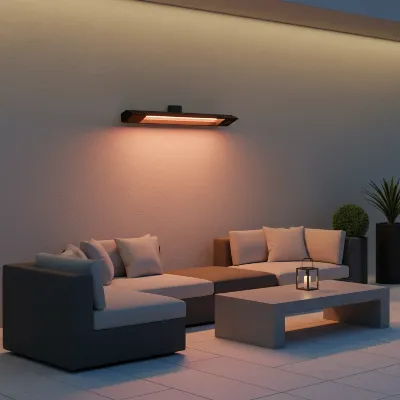 A sleek, wall-mounted electric infrared patio heater providing warmth to a modern outdoor seating area.
Smart Usage and Maintenance Tips for Your Budget Patio Heater
To ensure your budget patio heater provides lasting warmth and operates safely, proper usage and routine maintenance are crucial.
Operating Your Heater Safely
Safety should always be your top priority when using any outdoor heating appliance.
- Maintain Proper Clearance: Always follow the manufacturer’s recommended clearance distances from combustible materials like walls, ceilings, trees, and fabrics. This is typically 3-10 feet depending on the heater type.
- Stable Surface: Place your heater on a firm, level surface to prevent tipping.
- Ventilation for Propane: Never use propane patio heaters in enclosed or poorly ventilated areas like garages or sunrooms, as they produce carbon monoxide.
- Supervise Children and Pets: Keep a watchful eye on children and pets when the heater is in operation.
- Propane Specifics: Regularly check gas lines and connections for leaks (using a soapy water solution). Ensure the propane tank is upright and securely fastened.
- Electric Specifics: Always plug electric heaters into grounded outlets. Avoid using extension cords unless they are heavy-duty, outdoor-rated, and specifically designed for the heater’s wattage.
“Many people overlook proper clearances, but it’s the single most important safety rule for patio heaters. A few feet of space can prevent a serious incident.” – John Doe, Outdoor Heating Specialist
Maximizing Efficiency and Longevity
Simple practices can help your heater run more efficiently and extend its lifespan.
- Use Only When Needed: Turn off the heater when you leave the area or when the temperature rises.
- Strategic Positioning: Position your heater to maximize its heating effectiveness, considering wind direction and the layout of your seating area.
- Regular Cleaning: Periodically clean the reflector, burner, or heating elements to remove dust, debris, and insect nests. For propane heaters, ensure burner holes are clear. For electric, gently wipe down the elements when cool.
- Off-Season Storage: During months of disuse, clean your heater thoroughly, disconnect propane tanks, and store the unit in a dry, covered area. A weather-resistant cover can protect it from the elements if outdoor storage is unavoidable.
By adhering to these guidelines, your budget patio heater will continue to provide comforting warmth for many seasons to come.
Conclusion
Embracing outdoor living throughout the year doesn’t require a substantial financial investment. The market for 2026 offers an impressive array of budget-friendly patio heaters, allowing you to find a reliable solution for under $150. Whether you opt for the powerful portability of a propane unit like the AmazonBasics 46,000 BTU heater or the clean, convenient warmth of an electric infrared model such as the Westinghouse 1500 Watt or Dr. Infrared DR-238, thoughtful consideration of your space, needs, and safety guidelines will ensure a smart purchase. With the right choice, you can transform your patio into a welcoming oasis, defying the chill and creating memorable moments outdoors. Which budget-friendly patio heater will unlock your extended patio season this year?
Frequently Asked Questions
Can I use a propane patio heater on a screened-in porch?
It is generally not recommended to use propane patio heaters on screened-in porches, as these spaces can trap carbon monoxide emissions. Propane heaters require ample ventilation and are best suited for fully open outdoor areas to ensure safety and proper air circulation. Electric infrared heaters are a safer alternative for covered or semi-enclosed spaces.
How much does it cost to run a budget electric patio heater per hour?
The operating cost of an electric patio heater varies based on its wattage and your local electricity rates. For a 1500-watt heater (1.5 kW), if electricity costs $0.15 per kilowatt-hour (kWh), it would cost approximately $0.225 per hour to run (1.5 kW * $0.15/kWh). Check your local utility rates for a precise calculation.
What’s the best way to clean a patio heater?
For both propane and electric patio heaters, ensure the unit is completely cool and disconnected from its power source or propane tank before cleaning. Use a soft cloth with mild soap and water to wipe down exterior surfaces. For propane heaters, use a soft brush to clear any debris from the burner holes. Avoid harsh chemicals or abrasive cleaners that could damage finishes or components.
Are tabletop patio heaters effective?
Yes, tabletop Patio Heaters are effective for their intended purpose: providing localized warmth for small areas, such as around a dining table or a compact seating arrangement. They are not designed to heat a large patio but excel at creating a cozy, intimate warmth for those seated in close proximity, making them ideal for small balconies or specific zones.