Extending the usability of your outdoor living space well beyond summer requires reliable heating, and patio heaters are the perfect solution. But when faced with the choice between electric and propane models, how do you decide which is best for your patio in 2026? This comprehensive guide will explore the nuances of each type, delve into their advantages and disadvantages, and help you make an informed decision to keep your outdoor area warm and inviting all year round.
Types of Patio Heaters
Patio heaters have evolved significantly, moving from simple fire pits to sophisticated heating devices. Understanding their basic function and the various options available is crucial for selecting the ideal unit for your outdoor environment. Essentially, a patio heater works by emitting heat into a designated outdoor area, allowing you to comfortably enjoy your deck, garden, or balcony even when temperatures drop. Factors like the size of your space, desired heat output, energy source, and aesthetic preferences all play a vital role in determining the right heater for your needs.
Overview of Patio Heaters
|
Our Picks for the Best Patio Heater in 2026
As an Amazon Associate I earn from qualifying purchases.
|
||
| Num | Product | Action |
|---|---|---|
| 1 | VEVOR 50000BTU Propane Patio Heater for Outdoor Use, Tall Hammered With Round Table Design, Metal Burner and Wheels, Fixed Flame Heater for Party, Backyard, Garden, Bronze |

|
| 2 | 50,000 BTU Patio Heater - Propane Patio Heater with Sand Box, Double-Layer Stainless Steel Burner, Round Table Design Space Heater, Outdoor Heaters with Wheels for Garden and Patio, Brown |
|
| 3 | EAST OAK 50,000 BTU Patio Heater for Outdoor Use With Round Table Design, Double-Layer Stainless Steel Burner and Wheels, Outdoor Patio Heater for Home and Commercial, Bronze, 31.9" x 31.9" x 86.6" |
|
| 4 | EAST OAK 50,000 BTU Patio Heater for Outdoor Use with Round Table Design, Double-Layer Stainless Steel Burner, Wheels, Triple Protection System, Outdoor Heater for Home and Residential, Black |
|
| 5 | Amazon Basics 46,000 BTU Portable Outdoor Propane Patio Heater with Wheels, Commercial & Residential with Water Tank, Adjustable Heat Output, 9-Foot Radius, Slate Gray, 32.1"L x 32.1"W x 91.3"H |
|
| 6 | EAST OAK 50,000 BTU Patio Heater with Sand Box, Table Design, Double-Layer Stainless Steel Burner, Wheels, Triple Protection System, Outdoor Heater for Home and Residential, Pinecone |
|
| 7 | 50,000 BTU Patio Heater - Propane Patio Heater with Sand Box, Double-Layer Stainless Steel Burner Space Heater, Outdoor Heaters with Wheels, Used for Garden, Patio and Residential, Brown |
|
| 8 | EAST OAK 55,000 BTU Propane Patio Heater with Round Table & Stainless Steel Burner, Outdoor Heater with Wheels, Ideal For Large Patios, Gardens, Outdoor Events, and Commercial Use, Bronze |
|
| 9 | EAST OAK One-Hand Ignition Patio Heater with Enhanced Burner Head, 50,000 BTU Propane Outdoor Heater, One-Person Install, Round Table Design for Porch, Garden, Balcony, Backyard |
|
| 10 | Patio Heater for Outdoor Use, Infrared Electric Outdoor Heater, 1500W Instant Heating, 60-Degree Oscillation, 9 Heat Levels, 9H Timer, Remote, for Garage, Backyard, Large Room, Indoor, 32.2", White |
|
Patio heaters are specifically designed to combat cooler outdoor temperatures, transforming chilly evenings into cozy gatherings. Their primary purpose is to radiate warmth, creating an inviting ambiance for guests and extending the outdoor season. Early versions might have been rudimentary, but today’s market offers a diverse range of models, from classic gas-powered towers to sleek electric infrared panels. When considering a patio heater, key elements like the area you need to heat, available energy sources (electricity, propane, or even natural gas/wood), and the overall design that complements your outdoor decor are paramount.
Classification of Patio Heaters
Patio heaters are broadly categorized by their fuel source, each presenting a unique set of characteristics regarding performance, convenience, and cost.
Propane Heaters
Propane patio heaters are a popular choice, renowned for their powerful heat output and portability. These heaters typically use a standard 20-pound propane tank, similar to those used for BBQ grills, housed discreetly within their base.
- Advantages and Disadvantages:
- Pros: Propane models deliver substantial, instant heat, making them highly effective for larger outdoor spaces or colder temperatures. Their portability, often enhanced with wheels, allows you to move them wherever warmth is needed without being tethered to an electrical outlet. Many users find the visible flame, especially in pyramid-style heaters, adds to the outdoor ambiance.
- Cons: Running costs can be higher and more variable than electric models due to fluctuating propane prices and the need for frequent tank refills. They produce emissions like carbon dioxide and carbon monoxide, requiring good ventilation. Propane tanks also need to be stored safely outdoors.
- Common Types:
- Freestanding Column/Tower: These are the most common, often standing 7 to 10 feet tall with a mushroom-shaped reflector at the top, radiating heat in a wide circle.
- Pyramid Flame: Featuring a glass tube that encases a visible flame, these offer both warmth and a strong aesthetic appeal.
- Tabletop: Smaller, more compact units designed to sit on outdoor tables, ideal for more intimate settings.
- Mounted/Overhead: Some propane heaters can be mounted, though freestanding models are more prevalent.
- Safety Considerations: Always operate propane heaters in well-ventilated outdoor areas, maintaining at least three feet of clearance from combustible materials. Regularly inspect hoses and connections for leaks using a soapy water solution, and always turn off the gas supply at the tank when not in use. Never store spare propane tanks indoors or near ignition sources.
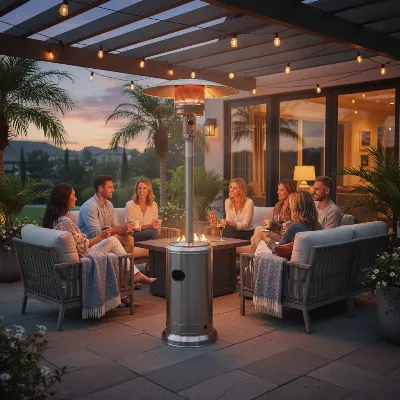 A classic mushroom-shaped propane patio heater illuminating a spacious outdoor patio at dusk.
Electric Heaters
Electric patio heaters offer a convenient, clean, and often more energy-efficient way to heat outdoor areas, especially smaller or semi-enclosed spaces. They operate by plugging into an electrical outlet and convert electricity into radiant heat.
- Advantages and Disadvantages:
- Pros: Electric heaters produce no emissions, making them environmentally friendlier and suitable for areas with less ventilation (though proper clearances are still crucial). They are quiet, require minimal maintenance, and offer consistent, stable heat without the need for fuel refills. Many models feature remote controls for easy operation.
- Cons: Their heat output is generally lower than propane, making them less effective for very large, open spaces or extremely cold conditions. They require an electrical outlet, which can limit placement, and high-powered units might need dedicated circuits. Initial purchase costs for powerful electric heaters can sometimes be higher.
- Common Types:
- Infrared Heaters (Shortwave, Mediumwave, Longwave): These are highly efficient, directly heating objects and people rather than the air. Shortwave (quartz) produces intense, quick heat with a ruby glow; mediumwave (carbon filament) offers robust, comfortable warmth for longer periods with low glare; longwave (ceramic) provides gentle, sun-like warmth with no glare.
- Halogen Heaters: Use halogen bulbs, often less efficient than infrared, with more diffused heat.
- Freestanding: Portable options that can be moved to different spots.
- Wall-Mounted/Ceiling-Mounted: Ideal for fixed installations, saving floor space and providing overhead warmth.
- Tabletop: Compact electric heaters for smaller, localized heat.
- Energy Efficiency: Electric infrared heaters are particularly efficient, converting nearly all energy into heat and directly warming people and objects, minimizing wasted energy. For optimal savings, match the heater’s wattage to the size of the area you need to heat.
- Safety Considerations: Electric heaters are generally considered safer as they have no open flames or gas leaks. However, ensure they are placed on stable surfaces, away from flammable materials, and that electrical connections are weather-resistant and properly grounded. Features like overheat and tip-over protection are common and important.
Wood-Burning Heaters (Brief Mention)
While not as common for general patio heating as gas or electric, wood-burning options like fire pits or outdoor fireplaces exist. They offer a rustic ambiance and intense heat but come with significant maintenance, smoke, and fuel handling requirements, making them less practical for widespread patio heating. They are best suited for occasional, dedicated use rather than consistent warmth.
Comparing Patio Heaters
Choosing between electric and propane patio heaters involves weighing several factors against your specific needs and outdoor setup. Each type has distinct characteristics that make it suitable for different situations.
| Feature | Propane Patio Heaters | Electric Patio Heaters |
|---|---|---|
| Heat Output | High BTU, powerful, instant heat | Lower wattage, radiant heat, efficient for targeted areas |
| Coverage Area | Excellent for large, open spaces | Best for smaller, semi-enclosed spaces |
| Running Cost | Higher, fluctuating fuel prices, regular refills | Generally lower, stable electricity cost |
| Upfront Cost | Often lower for basic models | Can be higher for powerful, advanced models |
| Portability | Highly portable (with tank), no wires | Limited by power outlet location; fixed options common |
| Installation | Minimal, just connect tank | Plug-and-go; mounted options require installation |
| Emissions | Produces CO2 and CO | Zero emissions during operation |
| Safety | Requires ventilation, leak checks, flame hazard | No open flame/gas, overheat/tip-over protection |
| Maintenance | Tank refills, hose inspection, ignition checks | Low, occasional cleaning of coils |
| Ambiance | Visible flame (pyramid), traditional warmth | Quiet, no flame (unless decorative LED), modern |
| Environmental | Less eco-friendly (combustion) | More eco-friendly (no direct emissions) |
Buying Guide for Patio Heaters
Making the right choice for your patio heater involves a thoughtful evaluation of your specific requirements and the characteristics of your outdoor space.
Determining Your Usage Needs
Before you even look at models, clarify what you need the heater to do.
- Space Area: Measure the square footage of the area you intend to heat. Large, open patios benefit from the higher BTU output of propane heaters, while smaller, more enclosed areas like balconies or covered decks are well-suited for electric models.
- Frequency of Use: If you plan to use the heater frequently for long periods, consider the long-term running costs. Electric heaters often prove more economical in this scenario due to lower hourly operating costs. For occasional use, the convenience of propane might outweigh the higher fuel expense.
- Budget: Establish a budget that covers both the initial purchase price and ongoing running costs (fuel/electricity). While some propane heaters have a lower upfront cost, electric models can offer greater savings over time.
Choosing the Right Heater Type
Once your needs are clear, revisit the pros and cons of electric and propane heaters.
- Evaluate Pros and Cons: If portability and powerful heat for a large, open area are your priorities, propane is likely your best bet. If cleanliness, quiet operation, lower long-term running costs, and a fixed, maintenance-free solution for a smaller area appeal to you, electric heaters, especially infrared, are superior.
- User Reviews: Consult online reviews and testimonials from other users. Real-world experiences can provide invaluable insights into a heater’s performance, durability, and user-friendliness.
- Reputable Brands: Focus on established brands known for quality and customer support. Brands like Bromic, Infratech, East Oak, Cuisinart, and Westinghouse frequently appear in top recommendations for their reliable performance and innovative features.
> “The most common mistake people make is underestimating their heating needs for the actual outdoor space. Always measure and factor in local climate before deciding on BTU or wattage.” – Admin, Revieweers.com
Important Considerations When Purchasing
Several practical points should influence your final decision.
- Technical Specifications: Pay close attention to BTU (for gas) or wattage (for electric) ratings, heating coverage area, and safety features like tip-over protection and automatic shut-off. For electric models, verify voltage requirements (most plug into standard outlets, but some powerful units need 220/240V).
- Warranty: A good warranty indicates the manufacturer’s confidence in their product. Understand the coverage period and what it includes.
- Reputable Retailers: Purchase from authorized dealers or well-known retailers to ensure product authenticity, valid warranties, and reliable after-sales service.
Notable Patio Heater Brands
The market offers a wide array of patio heater brands, each with its strengths. Some consistently receive high praise for quality and performance.
- Bromic Heating: Known for high-end, powerful electric and gas heaters, often seen in commercial settings, offering exceptional performance and sleek designs. Their Tungsten and Platinum Smart-Heat series are highly regarded.
- Infratech: A leader in electric infrared heating, offering discreet, efficient, and customizable solutions, especially popular for permanent, integrated installations.
- East Oak: Often cited for robust and stylish propane heaters that combine powerful heat output with thoughtful features like built-in tables.
- Cuisinart: Offers popular portable tabletop propane heaters and innovative overhead propane models, praised for their unique designs and ease of use.
- Westinghouse: A prominent brand for electric infrared patio heaters, noted for lightweight, quick heating for small areas, and minimal assembly.
- Amazon Basics / Hiland: Provide reliable, budget-friendly propane options, including classic tower and stylish pyramid models, often with good BTU output.
Using and Maintaining Your Patio Heater
Proper use and regular maintenance are essential for ensuring the longevity, efficiency, and safety of your patio heater.
Safe and Efficient Operation
- Placement is Key: Always place your heater on a flat, stable surface, away from anything flammable like walls, ceilings, awnings, or curtains. Maintain a minimum clearance of three feet around the unit. Never use outdoor heaters indoors or in poorly ventilated enclosed spaces.
- Pre-Use Check: Before each use, especially with propane heaters, inspect hoses and connections for any signs of wear or leaks. For electric heaters, ensure cords are undamaged and connections are secure.
- Stay Attentive: Never leave a patio heater unattended, particularly when children or pets are nearby.
- Shut Down Properly: After use, turn off the fuel supply (for propane) or unplug the unit (for electric) and allow it to cool completely before covering or storing.
Extending Lifespan through Care
- Regular Cleaning: Dust, debris, and cobwebs can accumulate, affecting performance and potentially posing fire hazards. Clean the heater regularly with a soft cloth and mild soap. For propane heaters, gently clean the burner and reflector. For electric, wipe down heating elements when cool.
- Seasonal Inspection: At the beginning and end of each heating season, perform a more thorough inspection. Check for rust, corrosion, or any physical damage. Replace worn parts immediately.
- Protective Storage: When not in use, especially during off-seasons or harsh weather, cover your patio heater with a weatherproof cover. Store it in a dry, sheltered location to prevent moisture damage and extend its lifespan.
Troubleshooting Common Issues
- No Heat (Propane): Check if the propane tank is full and the valve is open. Ensure the pilot light is lit (if applicable) and the igniter is working. Inspect hoses for kinks or leaks.
- No Heat (Electric): Verify the unit is plugged in, the outlet is functional, and the circuit breaker hasn’t tripped. Check for any damage to the heating element or cord.
- Reduced Heat Output: Clean any dust or debris from burners, reflectors, or heating elements. For propane, ensure proper gas flow. For electric, ensure no obstructions are blocking radiant heat.
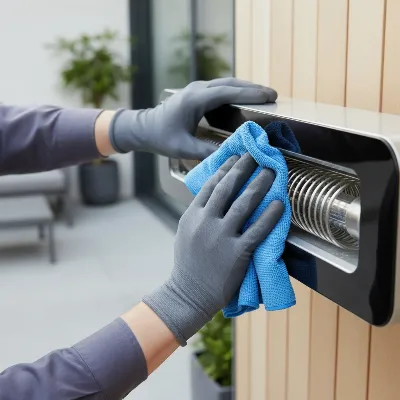 A person carefully cleaning an electric patio heater with a soft cloth on an outdoor patio.
Conclusion
Choosing between an electric and propane patio heater in 2026 ultimately depends on your individual needs, the characteristics of your outdoor space, and your priorities for cost, convenience, and environmental impact. Electric heaters excel in offering a clean, quiet, and efficient solution for smaller, more contained areas with lower long-term running costs. Propane heaters, on the other hand, provide powerful, instant heat and unparalleled portability, making them ideal for larger, open spaces where flexibility is key.
By carefully considering factors like heating coverage, installation requirements, safety features, and ongoing maintenance, you can confidently select a patio heater that will maximize your outdoor enjoyment for years to come. What kind of ambiance are you hoping to create in your outdoor sanctuary this year?
Frequently Asked Questions
Which type of patio heater is cheaper to operate in the long run?
Electric patio heaters are generally cheaper to operate in the long term. They convert almost all energy into heat, and electricity costs tend to be more stable than propane prices, which can fluctuate significantly. This makes them a more economical choice for frequent or extended use.
Can electric patio heaters be used in open spaces like large patios?
While electric patio heaters are efficient for targeted heating, their overall heat output is typically less than propane models. They are best suited for smaller, semi-enclosed spaces where radiant heat can be effectively directed to people and objects rather than trying to warm a vast open area.
What are the main safety concerns for propane patio heaters?
The primary safety concerns for propane patio heaters include the risk of carbon monoxide buildup if used in enclosed spaces, potential gas leaks from hoses or connections, and fire hazards due to the open flame. Proper ventilation, regular inspections, and maintaining clear distances from combustibles are crucial.
How often do propane tanks need to be refilled for patio heaters?
The frequency of propane tank refills depends on the heater’s BTU output and how often it’s used. A standard 20-pound propane tank can typically last from 4 to 10 hours on a high setting, or longer on lower settings. Heaters with higher BTU ratings will consume fuel faster.
Are there any eco-friendly options for patio heaters?
Electric patio heaters are generally considered more eco-friendly as they produce zero emissions during operation. Their environmental impact is tied to the source of electricity generation. Propane heaters, while convenient, do produce greenhouse gas emissions from combustion.
What are infrared electric patio heaters, and how do they work?
Infrared electric patio heaters use infrared technology to directly heat people and objects, similar to how the sun warms you. This method is highly efficient because it doesn’t waste energy trying to heat the surrounding air, making it effective for outdoor use even in breezy conditions.
Can I install a wall-mounted patio heater myself?
Many wall-mounted electric Patio Heaters are designed for relatively straightforward DIY installation if you have basic tools and electrical knowledge. However, for high-wattage units that require dedicated circuits or for natural gas installations, professional installation is strongly recommended for safety and compliance.