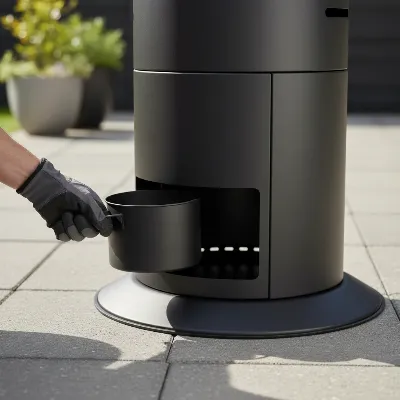
As the crisp evening air settles in, a patio heater becomes an inviting beacon, extending the enjoyment of your outdoor living space. For many, a wooden deck serves as the heart of their outdoor oasis, a perfect spot for relaxation and entertaining. The thought of combining a powerful heat source like a gas patio heater with a combustible surface like wood can understandably raise concerns. However, with the right knowledge and adherence to essential safety protocols, you can confidently and safely operate a gas patio heater on your wooden deck, transforming chilly evenings into cozy gatherings. This guide will walk you through the critical steps and considerations to ensure your warmth comes without worry.
Understanding Gas Patio Heaters and Deck Safety
Patio heaters are specifically designed to provide warmth in outdoor environments, making them ideal for extending the usability of your deck during cooler months. These units typically utilize propane or natural gas to generate radiant heat, warming people and objects directly rather than just the air. While the top portion of these heaters becomes intensely hot during operation, the base usually remains cool, which is a key factor in their suitability for deck use.
The primary concern when placing any heat source on a wooden deck is the potential for heat absorption and ignition. Wood, being a combustible material, can heat up over time when exposed to sustained warmth, increasing the risk of charring or even catching fire. Therefore, understanding heat dissipation and maintaining adequate separation from the heat source is paramount to preventing accidents and ensuring a safe outdoor experience. By familiarizing yourself with general safety principles and the unique requirements for wooden surfaces, you can effectively mitigate these risks.
Key Safety Considerations for Wood Decks
Ensuring the safe operation of your gas patio heater on a wooden deck hinges on several critical considerations, from following manufacturer guidelines to proper placement and ongoing vigilance. Adhering to these points will create a secure environment for you and your guests.
Manufacturer’s Guidelines: The Ultimate Rule
|
Our Picks for the Best Patio Heater in 2026
As an Amazon Associate I earn from qualifying purchases.
|
||
| Num | Product | Action |
|---|---|---|
| 1 | EAST OAK 50,000 BTU Patio Heater with Sand Box, Table Design, Double-Layer Stainless Steel Burner, Wheels, Triple Protection System, Outdoor Heater for Home and Residential, Pinecone |

|
| 2 | Amazon Basics 46,000 BTU Portable Outdoor Propane Patio Heater with Wheels, Commercial & Residential with Water Tank, Adjustable Heat Output, 9-Foot Radius, Slate Gray, 32.1"L x 32.1"W x 91.3"H |
|
| 3 | VEVOR 50000BTU Propane Patio Heater for Outdoor Use, Tall Hammered With Round Table Design, Metal Burner and Wheels, Fixed Flame Heater for Party, Backyard, Garden, Bronze |
|
| 4 | EAST OAK 55,000 BTU Propane Patio Heater with Round Table & Stainless Steel Burner, Outdoor Heater with Wheels, Ideal For Large Patios, Gardens, Outdoor Events, and Commercial Use, Bronze |
|
| 5 | 50,000 BTU Patio Heater - Propane Patio Heater with Sand Box, Double-Layer Stainless Steel Burner, Round Table Design Space Heater, Outdoor Heaters with Wheels for Garden and Patio, Brown |
|
| 6 | Patio Heater for Outdoor Use, Infrared Electric Outdoor Heater, 1500W Instant Heating, 60-Degree Oscillation, 9 Heat Levels, 9H Timer, Remote, for Garage, Backyard, Large Room, Indoor, 32.2", White |
|
| 7 | EAST OAK 50,000 BTU Patio Heater for Outdoor Use with Round Table Design, Double-Layer Stainless Steel Burner, Wheels, Triple Protection System, Outdoor Heater for Home and Residential, Black |
|
| 8 | EAST OAK 50,000 BTU Patio Heater for Outdoor Use With Round Table Design, Double-Layer Stainless Steel Burner and Wheels, Outdoor Patio Heater for Home and Commercial, Bronze, 31.9" x 31.9" x 86.6" |
|
| 9 | 50,000 BTU Patio Heater - Propane Patio Heater with Sand Box, Double-Layer Stainless Steel Burner Space Heater, Outdoor Heaters with Wheels, Used for Garden, Patio and Residential, Brown |
|
| 10 | EAST OAK One-Hand Ignition Patio Heater with Enhanced Burner Head, 50,000 BTU Propane Outdoor Heater, One-Person Install, Round Table Design for Porch, Garden, Balcony, Backyard |
|
The single most important step before operating any patio heater is to thoroughly read and understand its instruction manual. Every model has specific clearance requirements, assembly instructions, and operational safeguards unique to its design. These guidelines are not merely suggestions; they are the bedrock of safe usage, defining how far the heater must be from walls, furniture, ceilings, and other materials to prevent fire hazards. Always prioritize these manufacturer specifications above general recommendations, as they are tailored to your specific unit.
Minimum Clearance Requirements
Maintaining adequate clearance from combustible materials is non-negotiable for safety. Heat rises and radiates outwards, and wooden decks, overhead structures, and nearby furniture can absorb this heat, potentially leading to ignition.
- Side Clearance: Most manufacturers recommend at least a 3-foot (approximately 90 cm) gap between the heater and any surrounding walls, railings, or combustible objects like outdoor furniture, plants, or curtains. This distance allows heat to dissipate effectively.
- Overhead Clearance: For freestanding patio heaters, a minimum of 34 to 36 inches (around 86-91 cm) above the heater’s top is generally required. This applies to pergolas, awnings, tree branches, or any other overhead structures. Heat trapped above the unit without sufficient room to disperse can quickly become a fire risk. Always double-check your specific model’s manual, as some higher BTU units may require more.
Stable Placement and Securing the Unit
A gas patio heater must always be placed on a flat, level, and stable surface to prevent it from tipping over. An uneven deck or soft ground can make the heater unstable, especially when exposed to wind or accidental bumps. Many modern patio heaters come equipped with anti-tilt or tip-over protection features that automatically shut off the gas supply if the unit is knocked over. However, these are secondary safety measures, and proactive stabilization is always the best approach.
For enhanced security, especially in areas prone to wind, consider these options:
- Fastening: If your deck design permits, securing the heater directly to the deck with screws and bolts is the most robust method to prevent tipping.
- Weighted Base: Many portable models include a reservoir in the base that can be filled with sand or water, significantly increasing its stability. If your heater doesn’t have this, sandbags or specialized weights can be placed around the base.
- Location: Position the heater away from high-traffic areas where it might be accidentally bumped.
 Gas patio heater safely positioned on a wooden deck with proper clearance from furniture and railing
Ventilation: Importance for Covered Spaces
While patio heaters are designed for outdoor use, they are often placed under covered patios, gazebos, or awnings. In such scenarios, adequate ventilation is critical to prevent the buildup of carbon monoxide. Gas heaters consume oxygen and produce carbon monoxide, an odorless and colorless gas that can be deadly in enclosed spaces. Ensure that the covered area is truly “open-air,” with at least 25% of the sides open to allow for proper airflow. Never use a gas patio heater in a fully enclosed space, such as a sunroom or screened porch, that lacks sufficient ventilation.
Monitoring and Supervision
A gas patio heater should never be left unattended while in operation. Constant supervision allows for immediate intervention if an issue arises, such as unexpected gusts of wind causing instability or an object falling too close to the heat source. Before you leave the area, always ensure the heater is turned off and the gas supply is secured.
Pre-Operation Checklist and Maintenance
Beyond proper placement, a routine check and regular maintenance are crucial for the safe and efficient operation of your gas patio heater, especially on a wooden deck.
Checking for Leaks
Before each use, particularly for propane models, check for gas leaks. A simple and effective method is the “soap test.” Mix a solution of equal parts dish soap and water and apply it to all gas connections, including the cylinder valve and hose connections. Turn on the gas supply (without igniting the heater). If bubbles appear, you have a leak. Immediately turn off the gas, tighten connections, and re-test. If the leak persists, do not use the heater and seek professional repair or replacement. Always ensure the propane tank is upright and securely connected.
Inspecting the Unit
Visually inspect the entire heater for any signs of damage, wear, or blockages. Check the hose for cracks, kinks, or frayed areas. Ensure the igniter is working correctly. Make sure the burner array is free from debris, dust, or insect nests, which can impede gas flow and combustion. For natural gas lines, ensure connections are tight and the line is not obstructed or damaged.
Regular Cleaning and Storage
Regular cleaning and proper storage extend the life of your heater and ensure its safe operation.
- Cleaning: Dust and debris can accumulate on the emitter screen and other components. Use a soft brush or cloth to gently clean these areas when the heater is cool. Keep the reflective hood clean to maximize heat output.
- Storage: When not in use for extended periods, especially during off-seasons, disconnect the propane tank (if applicable) and store it upright in a well-ventilated outdoor area, away from direct sunlight or ignition sources. Store the heater itself in a dry, protected location, ideally covered, to prevent corrosion and damage.
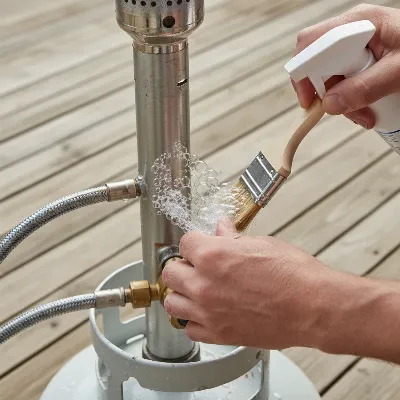 Person checking gas connections on a patio heater for leaks with a soap solution
Responding to Emergencies
Even with meticulous precautions, unforeseen incidents can occur. Knowing how to react in an emergency is vital for minimizing damage and ensuring safety.
What to Do if a Fire Starts
In the unlikely event that a fire ignites:
- Cut Off Gas Supply: Immediately turn off the gas supply at the source (the propane tank valve or natural gas shut-off). This is the most crucial step.
- Use Fire Extinguisher: If the fire is small and manageable, use a Class B fire extinguisher, designed for flammable liquid and gas fires.
- Evacuate and Call Emergency Services: If the fire is large, spreading, or you are unsure, evacuate the area immediately and call your local emergency services (e.g., fire department). Do not attempt to fight a fire you cannot control.
- Never Use Water: Do not use water on a gas fire, as it can spread the flames or cause dangerous reactions.
Understanding Automatic Shut-Off Features
Many modern gas patio heaters are equipped with advanced safety features, such as tilt switches that automatically shut off the gas if the heater is knocked over. Some also have thermocouples that cut off the gas supply if the flame extinguishes unexpectedly, such as during heavy winds. While these features add a layer of protection, they should never replace proper installation, stable placement, and vigilant supervision. They are designed as a fail-safe, not a primary safety measure.
Choosing the Right Gas Patio Heater for Deck Use
Selecting the appropriate gas patio heater is the first step toward safe and enjoyable deck heating. Consider these features when making your purchase:
- Safety Certifications: Look for heaters that meet recognized safety standards and certifications (e.g., CSA, ETL). These certifications indicate that the product has been tested and complies with safety requirements.
- Stable Base Design: Prioritize models with a wide, heavy, and stable base that resists tipping. Some designs also feature integrated wheels for easy, safe repositioning when cool.
- Anti-Tilt Shut-Off: As discussed, this feature automatically turns off the gas supply if the heater is tilted beyond a safe angle, significantly reducing fire risk.
- Adjustable Heat Settings: Heaters with variable BTU (British Thermal Unit) output allow you to control the heat intensity, ensuring you only use as much heat as needed for your space and conditions, potentially reducing fuel consumption and heat stress on surrounding materials.
- Construction Material: Look for durable, weather-resistant materials like stainless steel, which can withstand outdoor elements and maintain structural integrity over time.
“When choosing a patio heater for a wooden deck, prioritize models with robust anti-tilt mechanisms and a wide, stable base. These design elements are crucial for preventing accidents in dynamic outdoor environments.” – Sarah Jenkins, Outdoor Living Safety Expert
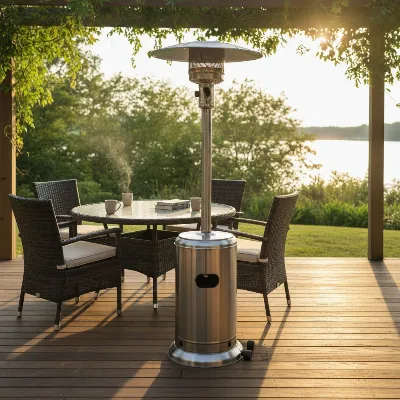 A securely placed gas patio heater on a wooden deck, demonstrating stability
Conclusion
Using a gas patio heater on a wooden deck can effortlessly extend the comfort and usability of your outdoor space well into the cooler seasons. While the combination of heat and wood demands respect and careful consideration, it is entirely safe and enjoyable when the proper precautions are taken. By diligently following manufacturer guidelines, ensuring adequate clearance, prioritizing stable placement, and conducting regular maintenance, you transform potential risks into opportunities for cozy evenings under the stars. Always remember that vigilance and adherence to safety protocols are your best tools for creating a warm, inviting, and hazard-free environment. How will you enjoy your extended outdoor season with the warmth of a safely operated patio heater?
Câu Hỏi Thường Gặp
How much clearance does a gas patio heater need from a wooden deck?
While the base of most gas Patio Heaters remains cool, general guidelines recommend at least a 3-foot (90 cm) horizontal clearance from any combustible materials like deck railings or furniture. Overhead, a minimum of 34-36 inches (86-91 cm) is typically required for structures like pergolas or awnings, but always consult your specific heater’s manual for precise measurements.