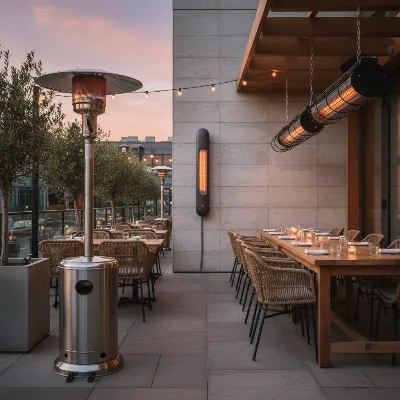
Enjoying your outdoor living space well into the cooler evenings often relies on the comforting warmth of a patio heater. These tall, elegant fixtures transform chilly patios into inviting havens, perfect for gathering with friends and family. However, the very design that makes them so effective—their height and often top-heavy construction—also makes them vulnerable to tipping. A fallen patio heater isn’t just an inconvenience; it can pose significant safety risks, including fire hazards and property damage. Understanding the root causes of instability and implementing proactive measures are crucial for ensuring your outdoor heating remains safe and secure. This guide will walk you through practical, expert-backed strategies to prevent your tall patio heater from tipping over, allowing you to relax and enjoy its warmth with complete peace of mind.
Understanding Why Tall Patio Heaters Tip
Tall patio heaters, while aesthetically pleasing and highly functional, possess inherent characteristics that contribute to their instability. Recognizing these factors is the first step toward implementing effective preventative measures. From their structural design to external forces, several elements can turn a steady heater into a potential hazard.
Design and Environmental Vulnerabilities
|
Our Picks for the Best Patio Heater in 2026
As an Amazon Associate I earn from qualifying purchases.
|
||
| Num | Product | Action |
|---|---|---|
| 1 | VEVOR 50000BTU Propane Patio Heater for Outdoor Use, Tall Hammered With Round Table Design, Metal Burner and Wheels, Fixed Flame Heater for Party, Backyard, Garden, Bronze |

|
| 2 | 50,000 BTU Patio Heater - Propane Patio Heater with Sand Box, Double-Layer Stainless Steel Burner Space Heater, Outdoor Heaters with Wheels, Used for Garden, Patio and Residential, Brown |
|
| 3 | EAST OAK 50,000 BTU Patio Heater for Outdoor Use With Round Table Design, Double-Layer Stainless Steel Burner and Wheels, Outdoor Patio Heater for Home and Commercial, Bronze, 31.9" x 31.9" x 86.6" |
|
| 4 | 50,000 BTU Patio Heater - Propane Patio Heater with Sand Box, Double-Layer Stainless Steel Burner, Round Table Design Space Heater, Outdoor Heaters with Wheels for Garden and Patio, Brown |
|
| 5 | EAST OAK 50,000 BTU Patio Heater with Sand Box, Table Design, Double-Layer Stainless Steel Burner, Wheels, Triple Protection System, Outdoor Heater for Home and Residential, Pinecone |
|
| 6 | EAST OAK 50,000 BTU Patio Heater for Outdoor Use with Round Table Design, Double-Layer Stainless Steel Burner, Wheels, Triple Protection System, Outdoor Heater for Home and Residential, Black |
|
| 7 | Amazon Basics 46,000 BTU Portable Outdoor Propane Patio Heater with Wheels, Commercial & Residential with Water Tank, Adjustable Heat Output, 9-Foot Radius, Slate Gray, 32.1"L x 32.1"W x 91.3"H |
|
| 8 | EAST OAK 55,000 BTU Propane Patio Heater with Round Table & Stainless Steel Burner, Outdoor Heater with Wheels, Ideal For Large Patios, Gardens, Outdoor Events, and Commercial Use, Bronze |
|
| 9 | EAST OAK One-Hand Ignition Patio Heater with Enhanced Burner Head, 50,000 BTU Propane Outdoor Heater, One-Person Install, Round Table Design for Porch, Garden, Balcony, Backyard |
|
| 10 | Patio Heater for Outdoor Use, Infrared Electric Outdoor Heater, 1500W Instant Heating, 60-Degree Oscillation, 9 Heat Levels, 9H Timer, Remote, for Garage, Backyard, Large Room, Indoor, 32.2", White |
|
The primary reason many patio heaters are prone to tipping lies in their design. Their considerable height, often combined with a relatively small base footprint and the weight of components like propane tanks or heating elements located higher up, creates a high center of gravity. This makes them inherently top-heavy and susceptible to external forces. Beyond design, environmental elements play a significant role. Strong winds are a common culprit, exerting considerable force on the heater’s large reflector and body, especially in open, unsheltered areas. Uneven terrain, such as sloped patios, soft grass, or gravel, can also compromise the base’s stability, causing the heater to wobble and become unbalanced. Furthermore, unforeseen events like falling debris or overhanging branches during a storm can strike the unit, knocking it off balance.
The Impact of Human Interaction
Even the most robustly designed and ideally placed patio heater can be vulnerable to human interaction. Placing heaters in high-traffic areas, near walkways, or dining spaces significantly increases the likelihood of accidental bumps from people or pets. During lively gatherings, an unintentional knock can easily destabilize a tall unit. Misjudging distances in crowded settings, particularly close to doorways or pathways, further elevates the risk of someone inadvertently tipping the heater over. Careful consideration of placement, therefore, is not only about environmental factors but also about anticipating and mitigating the potential for human error.
Essential Stability Solutions for Your Patio Heater
Ensuring your tall patio heater remains firmly upright requires a combination of common-sense placement and robust securing techniques. From adding foundational weight to physically anchoring the unit, these solutions are designed to counteract the factors that cause tipping, offering a safer and more enjoyable outdoor heating experience.
Weighing Down the Base
One of the most straightforward and effective methods to enhance the stability of your patio heater is to increase the weight at its base. A heavier base lowers the heater’s center of gravity, making it significantly more resistant to wind and accidental nudges.
- Built-in Reservoirs: Many modern patio heaters come equipped with built-in reservoirs in their base specifically designed to be filled with a stabilizing agent.
- Sand: Ideal for long-term solutions, sand provides consistent weight and does not evaporate. It’s a “set and forget” option that offers excellent stability.
- Water: While water is a convenient and easily accessible option, it serves as a temporary solution. Regular checks are essential to ensure the reservoir remains full, as water can evaporate over time, especially in warmer climates.
- External Weights: For heaters without internal reservoirs, external weights are an excellent alternative.
- Sandbags: Heavy-duty sandbags, especially those designed for outdoor use and made from fire-resistant materials, can be placed directly around the heater’s base to add substantial weight.
- Specialized Weights: Some manufacturers offer specific patio heater base weights, often made of durable, weather-resistant materials, designed to fit snugly around or under the unit’s base for a cleaner aesthetic and enhanced stability. Always ensure any external weights are heat/flame resistant to prevent hazards.
“Adding weight to the base is fundamentally about changing the center of gravity. A heavier base makes the entire unit more grounded, reducing its susceptibility to the leverage created by its height.” – Alex R. Petrov, Outdoor Safety Engineer
Securing the Heater to Structures
For maximum security, especially in windy conditions or high-traffic areas, physically securing your patio heater to a stable, immovable structure is highly recommended. This method prevents the entire unit from moving or toppling.
- Straps and Cords:
- Ratchet Straps or Heavy-Duty Bungee Cords: These can be used to fasten the heater’s stem or body to a nearby pillar, wall, or other sturdy, permanent outdoor fixture. Ensure the straps are made of fire-resistant materials (avoid plastic or rope that can melt or burn) and are placed a safe distance from the heater’s flame or heat source to prevent accidental damage or fire hazards.
- Placement: Wrap the straps around a robust part of the heater’s frame and secure them to an equally strong anchoring point. Double-check that all connections are taut and secure, but not so tight that they damage the heater or structure.
- Permanent Ground Fixing:
- Bolting: For the ultimate in stability, especially if you have a designated, permanent location for your heater, consider bolting it directly to a hard, flat surface like concrete or a reinforced wooden deck. This method completely eliminates the risk of tipping.
- Safety Check: Before drilling, always consult your heater’s owner’s manual to ensure that bolting is permissible and to avoid damaging any internal components like gas lines or electrical wiring. Ensure the bolts and anchors used are appropriate for outdoor conditions and the surface material.
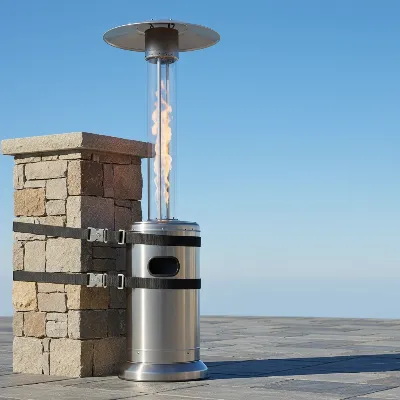 A tall patio heater secured with fire-resistant straps to a sturdy stone pillar on an outdoor patio, clear sky.
Strategic Placement for Maximum Stability
Where you place your patio heater is just as critical as how you secure it. Thoughtful placement can significantly reduce exposure to tipping hazards, enhancing both safety and heating efficiency.
- Flat, Stable, Hard Surfaces: Always position your patio heater on a hard, level surface such as concrete, paving stones, or a sturdy deck. These surfaces provide a firm foundation that minimizes wobbling and prevents the base from sinking. Avoid soft or uneven ground like grass, gravel, or mulch, which can create instability and increase the risk of tipping. If your patio has slight unevenness, use shims to level the base carefully.
- Low-Traffic Areas: To prevent accidental bumps, locate your heater in areas away from primary walkways, doorways, and high-traffic zones where people or pets are frequently moving. This reduces the chance of someone inadvertently knocking it over.
- Sheltered and Semi-Enclosed Spaces: Strong winds are a leading cause of patio heater tipping. Position your heater in a semi-enclosed area, such as a corner of your patio, against an exterior wall, or near a sturdy fence. These natural wind barriers can significantly reduce direct wind exposure, creating a more stable environment and improving heating effectiveness.
- Maintaining Safe Distances: Always adhere to the manufacturer’s recommended clearance distances from flammable objects. Typically, this is at least three feet in all directions from walls, furniture, trees, umbrellas, and other combustible materials. Overhanging branches should also be avoided, as they can fall or catch fire.
- Considering Windbreaks: For areas prone to high winds, strategically placing portable garden screens or wooden panels can create an effective windbreak around your heater. Ensure these barriers are securely anchored themselves so they don’t become hazards.
Leveraging Built-in Safety Features
Many modern patio heaters come equipped with advanced safety features designed to prevent accidents, including mechanisms specifically for tipping. Understanding and utilizing these can provide an additional layer of protection.
- Anti-Tilt Switches: A crucial safety feature in most contemporary freestanding patio heaters is the anti-tilt switch. This device automatically shuts off the gas supply or electrical power if the heater is tilted beyond a certain angle, preventing fuel leaks or overheating should the unit begin to tip. Regularly test this feature according to the manufacturer’s instructions to ensure it is functioning correctly.
- Lockable Wheels or Chocks: Some portable patio heaters are fitted with wheels for easy repositioning. While convenient, these wheels can also allow the heater to roll and become unstable in windy conditions or on sloped surfaces. Always ensure that the wheels are locked when the heater is in its operational position. For added security, consider using wheel chocks to prevent any unintended movement, particularly on slightly inclined patios.
Maintenance and Seasonal Care
Beyond initial setup, ongoing maintenance and appropriate seasonal care are vital for ensuring your tall patio heater remains stable and safe for years to come. Neglecting these aspects can compromise even the most robust securing measures.
- Regular Checks of Securing Mechanisms: Before each use, especially after periods of strong wind or heavy rain, take a moment to inspect all securing mechanisms. Check that any straps or cords are still tightly fastened and haven’t frayed or degraded. If your heater is bolted to the ground, ensure the bolts are secure and show no signs of loosening or corrosion. This quick check can identify potential weaknesses before they become hazards.
- Storing During Severe Weather: Even with all precautions, extreme weather conditions like severe storms, high winds, or heavy snowfall can still pose a risk to tall patio heaters. Whenever severe weather is forecast, it is always safest to move your portable heater to a sheltered area, such as a garage or shed. For permanently fixed heaters, consider covering them with a snug, weatherproof cover securely fastened to protect them from the elements and potential debris. If possible, disassembling the reflector and storing it indoors can prevent damage and rust.
- Checking Reservoirs: If your heater utilizes a water-filled reservoir for stability, make it a habit to check the water level regularly. Water can evaporate over time, reducing the base’s weight and compromising stability. Refill as needed to maintain optimal weighting. For sand-filled reservoirs, ensure there are no leaks or signs of sand depletion.
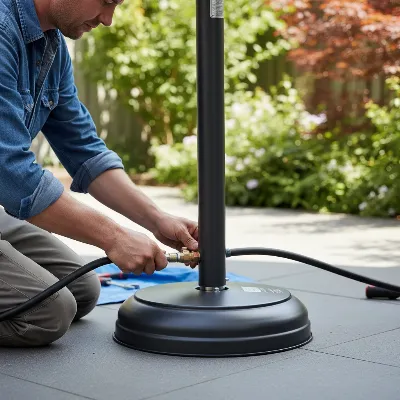 A person checking the stability and connections of a tall patio heater outdoors.
Conclusion
A tall patio heater is a fantastic addition to any outdoor space, extending the usability and comfort of your patio into cooler seasons. However, their design, while efficient, necessitates proactive measures to prevent tipping and ensure safety. By diligently weighing down the base with appropriate materials, securely anchoring the unit to stable structures, and thoughtfully choosing its placement away from high-traffic areas and direct wind, you can significantly mitigate the risk of accidents. Regular maintenance checks and smart seasonal care, including storing your heater during severe weather, further safeguard your investment and, more importantly, the well-being of everyone enjoying your outdoor oasis. Prioritizing these steps will allow you to enjoy the warmth and ambiance of your patio heater without worry, making your outdoor moments truly relaxing. What measures will you implement first to enhance your patio heater’s stability?
Câu Hỏi Thường Gặp
What causes patio heaters to tip over?
Patio heaters typically tip due to their top-heavy design, strong winds, uneven surfaces, or accidental bumps. Their height, combined with weight often concentrated higher up (like a propane tank), creates a high center of gravity, making them vulnerable to external forces like gusts of wind or an unintentional push.
Can I use water to weigh down my patio heater?
Yes, many patio heaters come with built-in reservoirs designed to be filled with water for added stability. However, water can evaporate, so it’s crucial to check and refill the reservoir regularly to maintain the necessary weight. Sand is often preferred for a more permanent and consistent weight.
How far should a patio heater be from a wall?
Generally, a patio heater should be placed at least three feet (about 0.9 meters) away from any walls, ceilings, furniture, or other flammable objects. Always consult your specific heater’s manufacturer manual for exact clearance requirements to ensure safe operation and prevent fire hazards.
Are anti-tilt switches reliable?
Anti-tilt switches are a valuable safety feature designed to automatically shut off the heater if it tips beyond a certain angle, helping to prevent accidents. While highly reliable, they should be regularly tested per the manufacturer’s instructions to ensure proper function and should not be the sole reliance for preventing tipping.
What kind of straps should I use to secure my patio heater?
When securing your Patio Heater with straps, use heavy-duty, fire-resistant materials like ratchet straps or specific outdoor-grade bungee cords. Avoid using standard ropes or plastic cords, as they can melt or burn if exposed to the heater’s heat. Ensure straps are positioned safely away from direct flames or intense heat.