A propane patio heater transforms outdoor spaces into warm, inviting sanctuaries, extending usability into cooler months. To safely light a propane patio heater, first ensure it’s in a well-ventilated area on a stable, non-combustible surface with at least three feet of clearance from combustibles. Then, connect the propane tank, open its valve, depress the heater’s control knob to the “PILOT” position, and press the igniter button. Hold the knob for 20-30 seconds (up to 90 seconds for new tanks) to engage the thermocouple before rotating it to “ON” for the main burner.
Understanding Your Propane Patio Heater
A propane patio heater provides warmth by burning liquid propane gas, typically stored in a standard 20-pound tank, which then heats an emitter screen at the top of the unit. This heat radiates outwards, warming people and objects in its vicinity. Key components include the propane tank connection, a regulator that controls gas pressure, a flexible hose, a control knob to manage gas flow (often with “OFF,” “PILOT,” and “ON” settings), and an igniter button, which creates a spark to light the pilot flame. Understanding these parts is fundamental to safe operation.
Essential Safety Checks Before You Light Up
Before attempting to light your propane patio heater, thorough safety checks are paramount to prevent hazards and ensure optimal performance. Ignoring these initial precautions can lead to serious risks. Take a few moments to confirm everything is in order before you even connect your propane tank. For explore our patio heater reviews on this site.
First, always ensure your patio heater is placed outdoors in a well-ventilated area, away from any enclosed spaces like garages, tents, or under low overhangs. Adequate air circulation is vital to disperse combustion byproducts. The heater should stand on a stable, level, non-combustible surface such as concrete, pavers, or stone. Avoid placing it directly on wooden decks or uneven ground, which could cause tipping. Maintain a minimum clearance of three feet (approximately one meter) around the heater from any combustible materials, including walls, furniture, fabrics, plants, and overhead structures. Regularly inspect the propane hose and regulator for any signs of wear, cracks, or damage. A simple soapy water test on all connections can detect leaks: apply a solution to connections, and if bubbles appear, you have a leak that needs to be addressed before operation.
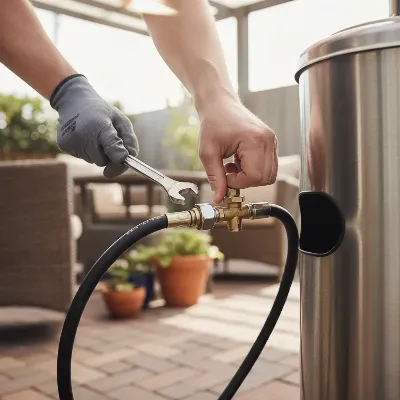 A person performing a safety check on a propane patio heater, inspecting connections and placement.
Step-by-Step Guide: Lighting Your Propane Patio Heater
Successfully lighting your propane patio heater involves a precise sequence of actions. Following these steps carefully will ensure a smooth and safe ignition process, allowing you to quickly enjoy the warmth.
To begin, ensure the heater’s control knob is in the “OFF” position. This prevents any accidental gas release before you are ready. Next, securely connect the propane tank’s regulator to the tank valve. Hand-tighten this connection firmly, but avoid over-tightening. Once connected, slowly turn the propane tank’s valve counter-clockwise to fully open the gas supply. This allows propane to flow from the tank into the heater’s system.
Now, gently depress the heater’s control knob and rotate it to the “PILOT” position. While continuing to hold the control knob down, press the igniter button repeatedly, usually several times in quick succession. You should hear a clicking sound and see a small pilot flame ignite through the viewing port near the burner. If your heater doesn’t have an electronic igniter, you may need a long-stemmed lighter or match to ignite the pilot manually while holding the control knob down.
Once the pilot light is visible, continue holding the control knob down for approximately 20 to 30 seconds. This crucial step allows the thermocouple, a safety device, to heat up and signal to the heater that a flame is present, preventing gas flow if the pilot goes out. For brand-new installations or recently refilled tanks, you might need to hold the knob for up to 60-90 seconds to purge any air from the gas line, ensuring a consistent propane supply.
> “Always patience is key when lighting the pilot. Holding the control knob long enough ensures the safety mechanism engages properly, preventing frustrating re-ignition attempts.” – Sarah Chen, Outdoor Appliance Safety Expert
After holding the knob for the recommended duration, slowly release it. The pilot flame should remain lit. If it extinguishes, repeat the process from depressing the control knob and rotating it to the “PILOT” position. Once the pilot is stable, you can ignite the main burner. Gently depress the control knob again and rotate it counter-clockwise to the “LOW” or “ON” position. The main burner should ignite, typically with a soft whooshing sound. You can then adjust the heat output by rotating the control knob to your desired setting, from “LOW” to “HIGH.”
What to Do If Your Patio Heater Doesn’t Light
Encountering issues when trying to light your patio heater can be frustrating, but many common problems have simple solutions. Addressing these systematically can often get your heater working without professional intervention.
If your patio heater fails to ignite, start by reconfirming the propane tank valve is fully open. Sometimes, it may appear open but isn’t quite far enough for sufficient gas flow. Next, check the igniter. For electronic igniters, a dead battery is a common culprit; try replacing it. Ensure the igniter pin is clean and properly aligned with the pilot assembly for a strong spark. If you hear the igniter clicking but see no spark, there might be an issue with the igniter itself or its wiring.
If the pilot light ignites but then extinguishes when you release the control knob, it usually indicates that the thermocouple isn’t heating sufficiently or quickly enough. This could be due to air in the gas line (especially with new tanks or after refilling), requiring you to hold the control knob down for a longer period (up to 90 seconds or more for initial purges). Alternatively, the pilot flame might be too weak or dirty, preventing proper contact with the thermocouple. Gently clean the pilot assembly if it appears obstructed. Wind can also blow out a weak pilot flame, so consider relocating the heater to a more sheltered spot. If the main burner lights but the flame is uneven, yellow, or produces black smoke, it suggests clogged burner ports or an issue with gas pressure. Turn off the heater, allow it to cool, and gently clean the burner ports with a soft brush. If problems persist after these troubleshooting steps, it’s advisable to consult the manufacturer’s manual or a qualified technician.
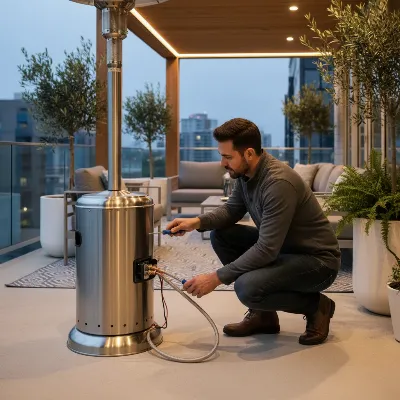 Person troubleshooting a propane patio heater, checking connections and igniter.
Safe Operation and Shut Down
Operating your patio heater safely extends beyond just lighting it; careful use and proper shutdown procedures are equally important for preventing accidents. Always maintain clear surroundings while the heater is in operation, ensuring no combustible materials drift or are placed within its three-foot safety zone. Never leave a lit patio heater unattended, especially if children or pets are present. Always use the heater in an open outdoor area to ensure proper ventilation and prevent carbon monoxide buildup. Do not attempt to move the heater while it is operating or still hot, as this can lead to burns or damage to the unit.
When you are finished using your patio heater, the shutdown process is straightforward. First, turn the heater’s control knob to the “OFF” position. This will immediately stop the flow of gas to both the main burner and the pilot light, extinguishing all flames. After turning off the heater, it is critical to also close the valve on the propane tank. Turn the tank valve clockwise until it is tight, ensuring no gas can escape from the tank. Allow the heater to cool completely before covering it or moving it for storage. This typically takes at least 45 minutes to an hour.
Maintaining Your Heater for Continued Safety
Regular maintenance ensures your propane patio heater remains a safe and reliable source of warmth season after season. A well-maintained heater not only performs better but also significantly reduces the risk of operational hazards.
Periodically, inspect the entire unit for any signs of rust, corrosion, or physical damage. Pay close attention to the burner screen and heat emitter, ensuring they are free from debris or blockages. Dust and cobwebs can accumulate, hindering efficient operation and potentially creating fire hazards. Clean the exterior surfaces with a damp cloth, and use a soft brush to clear any obstructions from the burner ports. Annually, or if you suspect any issues, have a qualified service technician inspect the gas lines, regulator, and connections. Store your propane patio heater in a dry, sheltered location when not in use, preferably with a weather-resistant cover. Always disconnect and store the propane tank separately, in an upright position, outdoors in a well-ventilated area, away from direct sunlight or heat sources.
Conclusion
Mastering the safe lighting and operation of your propane patio heater is key to extending the comfort and enjoyment of your outdoor living spaces. By consistently following the pre-lighting safety checks, understanding the clear step-by-step ignition process, and adhering to safe operational and shutdown practices, you can confidently utilize this effective heating solution. that vigilance and routine maintenance are your best allies in ensuring a warm, secure, and enjoyable experience for years to come. With these guidelines, you’re well-equipped to transform chilly evenings into cozy gatherings.
What outdoor experiences are you most looking forward to enhancing with the warmth of your patio heater?
Frequently Asked Questions
How long should I hold the control knob down when lighting a propane patio heater?
|
Our Picks for the Best Patio Heater in 2026
As an Amazon Associate I earn from qualifying purchases.
|
||
| Num | Product | Action |
|---|---|---|
| 1 | EAST OAK 50,000 BTU Patio Heater with Sand Box, Table Design, Double-Layer Stainless Steel Burner, Wheels, Triple Protection System, Outdoor Heater for Home and Residential, Pinecone |

|
| 2 | EAST OAK 55,000 BTU Propane Patio Heater with Round Table & Stainless Steel Burner, Outdoor Heater with Wheels, Ideal For Large Patios, Gardens, Outdoor Events, and Commercial Use, Bronze |
|
| 3 | Patio Heater for Outdoor Use, Infrared Electric Outdoor Heater, 1500W Instant Heating, 60-Degree Oscillation, 9 Heat Levels, 9H Timer, Remote, for Garage, Backyard, Large Room, Indoor, 32.2", White |
|
| 4 | 50,000 BTU Patio Heater - Propane Patio Heater with Sand Box, Double-Layer Stainless Steel Burner, Round Table Design Space Heater, Outdoor Heaters with Wheels for Garden and Patio, Brown |
|
| 5 | VEVOR 50000BTU Propane Patio Heater for Outdoor Use, Tall Hammered With Round Table Design, Metal Burner and Wheels, Fixed Flame Heater for Party, Backyard, Garden, Bronze |
|
| 6 | EAST OAK 50,000 BTU Patio Heater for Outdoor Use With Round Table Design, Double-Layer Stainless Steel Burner and Wheels, Outdoor Patio Heater for Home and Commercial, Bronze, 31.9" x 31.9" x 86.6" |
|
| 7 | EAST OAK One-Hand Ignition Patio Heater with Enhanced Burner Head, 50,000 BTU Propane Outdoor Heater, One-Person Install, Round Table Design for Porch, Garden, Balcony, Backyard |
|
| 8 | Amazon Basics 46,000 BTU Portable Outdoor Propane Patio Heater with Wheels, Commercial & Residential with Water Tank, Adjustable Heat Output, 9-Foot Radius, Slate Gray, 32.1"L x 32.1"W x 91.3"H |
|
| 9 | EAST OAK 50,000 BTU Patio Heater for Outdoor Use with Round Table Design, Double-Layer Stainless Steel Burner, Wheels, Triple Protection System, Outdoor Heater for Home and Residential, Black |
|
| 10 | 50,000 BTU Patio Heater - Propane Patio Heater with Sand Box, Double-Layer Stainless Steel Burner Space Heater, Outdoor Heaters with Wheels, Used for Garden, Patio and Residential, Brown |
|
When lighting, hold the control knob down for 20-30 seconds after the pilot flame ignites. For initial use or newly filled tanks, hold it for 60-90 seconds to purge air from the gas line, ensuring the pilot remains lit.
Why is my propane patio heater pilot light not staying lit?
If your pilot light doesn’t stay lit, the thermocouple may not be heating sufficiently. Ensure you hold the control knob down for enough time (20-30 seconds, or longer for new tanks) to allow the thermocouple to engage the safety valve. Check for blockages in the pilot assembly or strong wind interference.
Can I use my propane patio heater on a wooden deck?
It is generally recommended to place patio heaters on stable, non-combustible surfaces like concrete or pavers. If using on a wooden deck, ensure there is an additional non-combustible barrier underneath and adhere strictly to all clearance requirements from any flammable materials.
How often should I check my propane patio heater for gas leaks?
It is advisable to perform a gas leak check with soapy water every time you connect a new propane tank or if you suspect any issues. Regular visual inspections of the hose and connections for wear and tear should also be done before each use.
What is the minimum clearance needed around a propane patio heater?
You should maintain a minimum clearance of at least three feet (one meter) around the sides and from the top of the heater to any combustible materials, including walls, furniture, plants, and overhead structures, to prevent fire hazards.
Frequently Asked Questions
How long should I hold the control knob down when lighting a propane patio heater?
When lighting, hold the control knob down for 20-30 seconds after the pilot flame ignites. For initial use or newly filled tanks, hold it for 60-90 seconds to purge air from the gas line, ensuring the pilot remains lit.
Why is my propane patio heater pilot light not staying lit?
If your pilot light doesn't stay lit, the thermocouple may not be heating sufficiently. Ensure you hold the control knob down for enough time (20-30 seconds, or longer for new tanks) to allow the thermocouple to engage the safety valve. Check for blockages in the pilot assembly or strong wind interference.
Can I use my propane patio heater on a wooden deck?
It is generally recommended to place patio heaters on stable, non-combustible surfaces like concrete or pavers. If using on a wooden deck, ensure there is an additional non-combustible barrier underneath and adhere strictly to all clearance requirements from any flammable materials.
How often should I check my propane patio heater for gas leaks?
It is advisable to perform a gas leak check with soapy water every time you connect a new propane tank or if you suspect any issues. Regular visual inspections of the hose and connections for wear and tear should also be done before each use.
What is the minimum clearance needed around a propane patio heater?
You should maintain a minimum clearance of at least three feet (one meter) around the sides and from the top of the heater to any combustible materials, including walls, furniture, plants, and overhead structures, to prevent fire hazards.
Get our weekly buyer guide
Practical specs, not advice. Unsubscribe anytime.

This was super helpful for a newbie like me. I just got a new propane patio heater and wasn’t sure about the setup. The advice on ensuring at least three feet of clearance from combustibles was a good reminder. It’s working great now, but I wish there was a quick troubleshooting tip for when the pilot light doesn’t stay lit on the first try.
I followed the steps for lighting my heater, especially making sure it was on a stable, non-combustible surface. It worked, but I found that my specific heater’s igniter button is a bit finicky and sometimes takes a few presses to catch. The instructions were clear, but it didn’t quite solve my personal issue with the button itself. Still, good general guidance.
I always struggled with getting my patio heater going, especially after storing it for the winter. The tip about holding the control knob for 20-30 seconds (or even longer for new tanks) really made a difference. My heater fired right up this time, and we enjoyed a cozy evening on the patio. So glad I read this before our backyard get-together!
Extending our outdoor usability into cooler months is exactly why we invested in a patio heater. I appreciated the clear breakdown of connecting the propane tank and opening its valve. It’s easy to overlook the simple steps when you’re excited to get warm, but these instructions made it foolproof. Our patio is now our favorite evening spot!