You can easily restore a rusty propane patio heater at home by following a four-step process: disassembling and wiping down the unit, applying a rust remover to exterior surfaces, carefully cleaning internal components like the burner and pilot assembly, and finally reassembling and performing a leak test. This method helps remove existing rust and prevents further corrosion, ensuring the heater operates safely and efficiently.
Understanding Rust: Why Your Patio Heater Suffers
Rust, or iron oxide, forms when iron or steel components on your patio heater are exposed to oxygen and moisture over time. Propane patio heaters, being outdoor appliances, are inherently vulnerable to these conditions. Factors like high humidity, rain, dew, and especially salt-laden air in coastal regions, significantly accelerate the corrosion process. Even seemingly benign dust and debris can trap moisture, creating microclimates where rust thrives.
Ignoring rust is more than just an aesthetic oversight. Pitting and corrosion can weaken structural components, potentially leading to instability. Rust can also clog burner ports and affect the ignition system, leading to inefficient burning, reduced heat output, or even dangerous gas leaks if critical components are compromised. Regular cleaning and proactive maintenance are essential to ensure your heater operates safely and effectively for years to come.
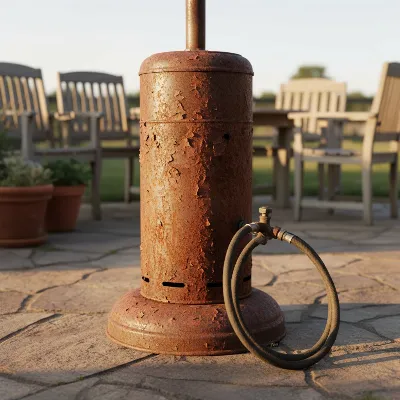 Close-up of a rusty propane patio heater base and pole, showing severe orange corrosion, set in an outdoor patio environment.
Safety First: Essential Preparations Before You Begin
Before you even think about tackling that rust, safety must be your absolute priority. Working with gas appliances requires careful attention to detail to prevent accidents.
First, ensure the propane tank is completely disconnected from your heater. Turn the gas valve on the tank to the “off” position and then carefully unscrew the regulator from the tank. Allow the heater to cool down thoroughly if it has been recently in use. Never attempt to clean a hot heater. Choose a well-ventilated outdoor area for your cleaning project, away from any open flames, sparks, or potential ignition sources. Finally, gather all your necessary tools and don appropriate personal protective equipment (PPE), including sturdy work gloves to protect your hands from chemicals and abrasives, and safety glasses to shield your eyes from debris or splashes.
> “Safety is non-negotiable when dealing with propane appliances. Always disconnect the gas and ensure the unit is cool before starting any maintenance. A few minutes of careful preparation can prevent hours of regret.” – John Smith, Senior Technician, Revieweers.com
Your Rust-Busting Arsenal: Tools and Cleaning Agents
Equipping yourself with the right tools and cleaning agents will make the rust removal process much more effective and manageable. You’ll find a mix of natural remedies, commercial solutions, and essential abrasive tools indispensable.
Natural Rust Removers
|
Our Picks for the Best Patio Heater in 2026
As an Amazon Associate I earn from qualifying purchases.
|
||
| Num | Product | Action |
|---|---|---|
| 1 | EAST OAK 55,000 BTU Propane Patio Heater with Round Table & Stainless Steel Burner, Outdoor Heater with Wheels, Ideal For Large Patios, Gardens, Outdoor Events, and Commercial Use, Bronze |

|
| 2 | 50,000 BTU Patio Heater - Propane Patio Heater with Sand Box, Double-Layer Stainless Steel Burner, Round Table Design Space Heater, Outdoor Heaters with Wheels for Garden and Patio, Brown |
|
| 3 | VEVOR 50000BTU Propane Patio Heater for Outdoor Use, Tall Hammered With Round Table Design, Metal Burner and Wheels, Fixed Flame Heater for Party, Backyard, Garden, Bronze |
|
| 4 | 50,000 BTU Patio Heater - Propane Patio Heater with Sand Box, Double-Layer Stainless Steel Burner Space Heater, Outdoor Heaters with Wheels, Used for Garden, Patio and Residential, Brown |
|
| 5 | Patio Heater for Outdoor Use, Infrared Electric Outdoor Heater, 1500W Instant Heating, 60-Degree Oscillation, 9 Heat Levels, 9H Timer, Remote, for Garage, Backyard, Large Room, Indoor, 32.2", White |
|
| 6 | EAST OAK One-Hand Ignition Patio Heater with Enhanced Burner Head, 50,000 BTU Propane Outdoor Heater, One-Person Install, Round Table Design for Porch, Garden, Balcony, Backyard |
|
| 7 | Amazon Basics 46,000 BTU Portable Outdoor Propane Patio Heater with Wheels, Commercial & Residential with Water Tank, Adjustable Heat Output, 9-Foot Radius, Slate Gray, 32.1"L x 32.1"W x 91.3"H |
|
| 8 | EAST OAK 50,000 BTU Patio Heater for Outdoor Use With Round Table Design, Double-Layer Stainless Steel Burner and Wheels, Outdoor Patio Heater for Home and Commercial, Bronze, 31.9" x 31.9" x 86.6" |
|
| 9 | EAST OAK 50,000 BTU Patio Heater for Outdoor Use with Round Table Design, Double-Layer Stainless Steel Burner, Wheels, Triple Protection System, Outdoor Heater for Home and Residential, Black |
|
| 10 | EAST OAK 50,000 BTU Patio Heater with Sand Box, Table Design, Double-Layer Stainless Steel Burner, Wheels, Triple Protection System, Outdoor Heater for Home and Residential, Pinecone |
|
For light to moderate rust, household items can often do the trick:
- White Vinegar: Its acetic acid content helps dissolve rust. You can soak smaller components in a vinegar bath overnight or apply it to larger surfaces with a rag and let it sit for several hours.
- Baking Soda Paste: Mix baking soda with water to form a thick paste. For tougher rust, substitute water with hydrogen peroxide. Apply the paste to rusted areas and allow it to sit for a few hours before scrubbing.
- Lemon/Lime Juice and Salt Paste: The citric acid in citrus fruits, combined with the abrasive quality of salt, creates a potent natural rust remover. Apply the paste, let it sit for a few hours, then scrub with the citrus rind or a brush.
- Coca-Cola: The phosphoric acid in cola can help break down rust. Pour it over affected areas and let it sit, then scrub and rinse.
- Aluminum Foil and Saltwater: Crumple aluminum foil into a ball, dip it in saltwater, and use it as a gentle abrasive scrubber.
Commercial Rust Removers
For more stubborn or extensive rust, commercial products offer stronger solutions:
- Rust Dissolvers (Soaks): Products like Evapo-Rust or WD-40 Specialist Rust Remover Soak are often non-toxic, water-based solutions that allow you to submerge rusty items for several hours or overnight. They work by chelating (binding with) the rust, often without harming the underlying metal or paint.
- Acid-Based Removers: Solutions containing phosphoric acid (like AC Pro-Rust gel or some rust converters) or hydrochloric acid (like CLR Pro) are highly effective but require more caution due to their corrosive nature. They rapidly dissolve rust upon contact. Always follow manufacturer instructions and wear full PPE. Loctite Naval Jelly is another heavy-duty, gel-form option.
- Rust Converters: Products like Corroseal don’t remove rust but convert it into a stable, black, paintable surface, preventing further corrosion. They are ideal for areas where complete rust removal is difficult.
Abrasive Tools
These tools are crucial for scrubbing away loosened rust and preparing surfaces:
- Wire Brushes: Effective for heavy rust on durable surfaces.
- Steel Wool/Scrubbing Pads: Varying grits for different levels of rust. Use finer grades for polished surfaces.
- Sandpaper: Start with coarser grits for heavy rust (e.g., 80-120 grit) and move to finer grits (220+) for smoothing. Emery cloth sandpaper is excellent for delicate components like thermocouples.
- Aluminum Foil: As mentioned, crumpled foil can serve as a mild abrasive.
- Microfiber Cloths: For wiping, rinsing, and applying protective finishes.
- Compressed Air: Canned air or an air compressor is invaluable for clearing dust and debris from burner ports and small crevices.
- Pipe Cleaners/Cotton Swabs: Essential for cleaning small orifices and burner assembly holes.
Step-by-Step Rust Removal for Your Propane Patio Heater
With safety measures in place and your arsenal ready, it’s time to tackle the rust. Follow these steps for a thorough cleaning:
Step 1: Disassembly and Initial Wipe-Down
Carefully disassemble your patio heater. This typically involves removing the top reflector dish, the protective mesh screen, and sometimes the outer housing to gain access to the burner assembly and internal components. Refer to your owner’s manual for specific instructions for your model. Once partially disassembled, use a dry microfiber cloth or a soft brush to wipe away any loose dust, dirt, and debris from all surfaces. This initial cleaning will help you better identify rusted areas.
Step 2: Tackle the Exterior Rust
Focus on the rusted exterior surfaces like the pole, base, and reflector.
- Apply Rust Remover: Choose your preferred rust remover. For light rust, apply a natural solution like vinegar or a baking soda paste. For heavier rust, opt for a commercial rust dissolver or an acid-based cleaner. Follow the product’s instructions for application and dwell time.
- Scrub Away Rust: Using an appropriate abrasive tool (wire brush, steel wool, sandpaper, or crumpled aluminum foil), vigorously scrub the rusted areas. You’ll see the rust lifting away. Be persistent but mindful not to damage the underlying metal. For stainless steel, scrub in the direction of the grain.
- Rinse Thoroughly: Once the rust is removed, rinse the cleaned areas with clean water. It is absolutely critical to avoid getting water or cleaning solutions into the burner assembly, pilot light, or electrical components, as moisture can cause irreparable damage and make the heater unsafe to use. If necessary, use a damp cloth to wipe surfaces clean, rather than hosing down the entire unit.
- Dry Completely: This step is crucial for preventing immediate re-rusting. Use a clean, dry cloth to absorb as much moisture as possible, then allow the heater to air dry completely in the sun. You can use compressed air to speed up drying in hard-to-reach spots.
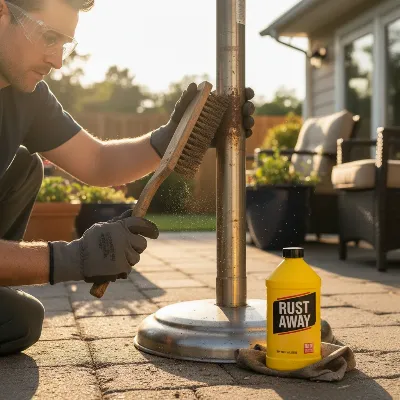 Person cleaning rust off a propane patio heater's pole with a wire brush and rust remover, wearing gloves and safety glasses.
Step 3: Cleaning Internal Components (Burner & Pilot Assembly)
This is a delicate but vital part of the cleaning process, focusing on the heart of your heater.
- Crucial Safety Note: Never spray water or liquid cleaning solutions directly onto the burner, pilot assembly, ignitor, or gas control valve. Getting these components wet with water or corrosive cleaners can lead to serious malfunction and safety hazards.
- Clear Burner Ports: Use a can of compressed air to blow out any dust, spiderwebs, or debris from the burner ports and orifices. Spiders and insects often build nests inside these areas, blocking gas flow and causing ignition issues or dangerous flames.
- Clean Burner Assembly Holes: Soak a cotton swab with rubbing alcohol and gently rub it over the small holes in the burner assembly to remove grease, dirt, and carbon buildup.
- Venturi Tubes: Locate the venturi tubes (often at the back of the burner assembly). Use a pipe cleaner, twisted into a circle if needed, to clear any blockages inside.
- Thermocouple: The thermocouple is a small metal rod near the pilot light that senses heat. If it’s covered in carbon buildup, your heater may struggle to ignite or stay lit. Gently clean it by lightly sanding with emery cloth sandpaper.
- Inspect Hoses: While you’re in there, inspect the propane hose for any cracks, kinks, abrasions, or signs of wear. If you find any damage, the hose must be replaced by a qualified professional. Also, check O-rings for signs of perishing.
Step 4: Reassembly & Leak Test
Once all components are clean and dry, carefully reassemble your patio heater, reversing the disassembly steps. Double-check that all connections are secure.
Before using the heater, perform a leak test on the gas connections. Mix a solution of dish soap and water. With the propane tank connected and the gas valve slowly opened, brush the soapy solution over all gas connections (hose, regulator, valve). If you see any bubbles forming, there is a gas leak. Immediately shut off the gas, re-tighten the connection, and re-test. If the leak persists, do not use the heater and seek professional assistance.
Long-Term Protection: Keeping Rust at Bay
Preventing rust is far easier than removing it. Implement these practices to extend the life and beauty of your propane patio heater:
- Protective Cover: Invest in a high-quality, weather-resistant patio heater cover. This is your best defense against moisture, dust, and UV rays when the heater is not in use.
- Rust-Inhibiting Finishes: After cleaning heavily rusted areas, consider applying a rust-inhibiting primer and then a high-heat outdoor paint to create a durable protective layer. For stainless steel, regular application of stainless steel cleaner can help maintain its finish and provide a barrier. Car wax can also be applied to painted surfaces for added protection.
- Strategic Storage: During prolonged periods of non-use, especially during off-seasons or inclement weather, store your patio heater indoors in a dry, sheltered location like a garage or shed. Disconnect and store the propane tank separately and upright.
- Regular Wiping: A quick wipe-down with a dry cloth after each use, or at least weekly, can remove accumulated moisture and dust before rust has a chance to form.
- Avoid Wet Locations: Position your heater in an area where it’s less exposed to direct rain and sprinkler systems.
When to Seek Professional Help or Consider Replacement
While many rust issues can be handled at home, some situations warrant professional attention or even replacement:
- Extensive Internal Corrosion: If gas lines, valves, or critical internal components show significant, deep corrosion that you cannot safely access or clean.
- Persistent Gas Leaks: If you detect a gas leak that cannot be resolved by tightening connections after cleaning. Gas professionals have specialized tools for diagnosing and repairing gas-related issues.
- Damaged Burner or Pilot Assembly: Any significant physical damage, warping, or severe unremovable corrosion to the burner or pilot light assembly can impair safe operation.
- Structural Integrity Compromised: If the heater’s base, pole, or mounting points are heavily rusted and feel unstable, it’s a significant safety hazard.
In these cases, a professional technician can assess the damage and advise on repair or replacement, ensuring your safety remains paramount.
Conclusion
A rusty propane patio heater doesn’t have to be a lost cause. With a methodical approach to cleaning, the right tools, and a commitment to regular maintenance, you can effectively remove rust, restore its functionality, and significantly extend its lifespan. Prioritizing safety, understanding the causes of corrosion, and applying preventative measures are key to keeping your outdoor heating investment looking great and working efficiently for many seasons to come. Don’t let rust diminish your outdoor enjoyment – take control and revive your patio heater today! What’s your go-to trick for keeping outdoor heaters pristine?
Frequently Asked Questions
How often should I clean my propane patio heater?
For optimal performance and longevity, a thorough cleaning, especially rust removal, should be done at least once a season or semi-annually, particularly if you live in a humid or coastal environment. Light cleaning, like wiping down the exterior and checking for debris, should be done monthly or after heavy exposure to rain.
Can I use a pressure washer on my patio heater?
No, it is strongly advised against using a pressure washer on your patio heater. The high pressure can force water into sensitive internal components like the burner assembly, pilot light, and electrical wiring, causing irreversible damage and creating significant safety hazards.
Is it safe to paint a rusty patio heater?
Yes, it can be safe and beneficial to paint a rusty patio heater after the rust has been properly removed and the surface prepared. Use a rust-inhibiting primer followed by a high-heat outdoor-grade paint to ensure durability and protection against future corrosion. Do not paint burner elements or parts that come into direct contact with the flame.
What’s the best way to store my patio heater in winter?
The best way to store your patio heater in winter is to clean it thoroughly, ensure it’s completely dry, disconnect the propane tank, and then cover it with a high-quality, weather-resistant cover. For maximum protection, store it in a dry, sheltered location like a garage or shed, away from extreme temperatures and moisture.
Can rust affect the performance of my patio heater?
Absolutely. Rust can lead to several performance issues, including clogged burner ports resulting in reduced heat output, inefficient gas combustion, and inconsistent flames. It can also corrode electrical components or the thermocouple, making ignition difficult or causing the heater to shut off unexpectedly, posing a safety risk.
Frequently Asked Questions
How often should I clean my propane patio heater?
For optimal performance and longevity, a thorough cleaning, especially rust removal, should be done at least once a season or semi-annually, particularly if you live in a humid or coastal environment. Light cleaning, like wiping down the exterior and checking for debris, should be done monthly or after heavy exposure to rain.
Can I use a pressure washer on my patio heater?
No, it is strongly advised against using a pressure washer on your patio heater. The high pressure can force water into sensitive internal components like the burner assembly, pilot light, and electrical wiring, causing irreversible damage and creating significant safety hazards.
Is it safe to paint a rusty patio heater?
Yes, it can be safe and beneficial to paint a rusty patio heater after the rust has been properly removed and the surface prepared. Use a rust-inhibiting primer followed by a high-heat outdoor-grade paint to ensure durability and protection against future corrosion. Do not paint burner elements or parts that come into direct contact with the flame.
What's the best way to store my patio heater in winter?
The best way to store your patio heater in winter is to clean it thoroughly, ensure it's completely dry, disconnect the propane tank, and then cover it with a high-quality, weather-resistant cover. For maximum protection, store it in a dry, sheltered location like a garage or shed, away from extreme temperatures and moisture.
Can rust affect the performance of my patio heater?
Absolutely. Rust can lead to several performance issues, including clogged burner ports resulting in reduced heat output, inefficient gas combustion, and inconsistent flames. It can also corrode electrical components or the thermocouple, making ignition difficult or causing the heater to shut off unexpectedly, posing a safety risk.
How to Remove Rust from a Propane Patio Heater
This guide provides a step-by-step process for safely and effectively removing rust from your propane patio heater, covering disassembly, cleaning, and reassembly.
Carefully disassemble your patio heater, removing the top reflector dish, mesh screen, and outer housing to access internal components. Refer to your owner's manual for specific instructions. Use a dry microfiber cloth or soft brush to wipe away loose dust and debris, helping to identify rusted areas.
Apply your chosen rust remover (natural or commercial) to rusted exterior surfaces like the pole, base, and reflector. Follow product instructions for dwell time. Vigorously scrub the rusted areas with an appropriate abrasive tool, then rinse thoroughly with clean water, avoiding internal components. Dry completely with a clean cloth and air dry in the sun.
Never spray water or liquid cleaners directly onto the burner, pilot assembly, ignitor, or gas control valve. Use compressed air to clear dust from burner ports and orifices. Clean burner assembly holes with a rubbing alcohol-soaked cotton swab, clear venturi tubes with a pipe cleaner, and gently sand the thermocouple with emery cloth sandpaper. Inspect the propane hose for damage.
Carefully reassemble your patio heater, ensuring all connections are secure. Before use, perform a leak test by brushing a dish soap and water solution over all gas connections with the propane tank connected and valve open. If bubbles appear, immediately shut off gas, re-tighten, and re-test. Seek professional help if the leak persists.
Get our weekly buyer guide
Practical specs, not advice. Unsubscribe anytime.

I followed the guide for my old propane heater that was looking pretty rough after a few winters. The tip about carefully cleaning the internal components, especially the pilot assembly, was super helpful. It’s working like new now, and I didn’t have to buy a whole new unit. Definitely saved me some money and hassle!
I tried this method on my heater, which had a lot of rust from being near the coast. While it did help with some of the surface rust, the mention of salt-laden air really hit home. I think my heater might be too far gone for a full restoration, but it did improve the appearance somewhat. I appreciate the detailed steps, especially the leak test part.
This guide was mostly great for tackling the rust on my patio heater. The four-step process was easy to follow, and the exterior surfaces look much better after applying the rust remover. My only minor complaint is that getting some of the older screws off during disassembly was a real pain, but that’s more about my heater than the instructions.
Fantastic advice! My propane heater was starting to show significant rust spots, and I was worried I’d have to replace it. The explanation about how dust and debris can trap moisture really made sense. After cleaning and treating it, it looks so much better and feels safer to use. Highly recommend this approach for anyone with a rusty outdoor heater.