The best tabletop patio heaters for small decks in 2026 are compact models that deliver focused warmth without occupying valuable floor space, making them ideal for intimate outdoor settings. These heaters typically warm a radius of 5 to 7 feet, with propane models offering 8,000 to 12,000 BTUs and electric models providing 500 to 1,500 watts. Key considerations include fuel type (propane for portability and high heat, electric for convenience and no emissions), safety features like tip-over switches, and maintaining a minimum 3-foot clearance from combustible materials.
Understanding Tabletop Patio Heaters for Small Decks
Tabletop patio heaters are ingeniously designed to bring localized warmth to smaller outdoor areas. Unlike their freestanding counterparts, these units are compact, often resembling stylish lamps, and are perfectly suited for placement directly on a dining table, side table, or countertop. Their primary purpose is to create a personal bubble of warmth, making them ideal for intimate gatherings, a quiet dinner for two, or simply enjoying a cup of coffee on your balcony.
What Makes a Tabletop Heater Ideal for Small Spaces?
The appeal of tabletop heaters for small decks lies in their unique combination of features. Their diminutive footprint means they don’t consume valuable floor space, a critical factor when dealing with compact areas. Portability is another major advantage; many models are lightweight and easy to move, allowing you to reposition the warmth wherever it’s needed most. These heaters are engineered to provide effective, localized heat coverage, typically warming a radius of 5 to 7 feet, which is perfect for concentrated seating areas without attempting to heat an entire yard. When selecting one, consider the heater’s physical size, its heat output relative to your space, and, crucially, its fuel type.
Types of Tabletop Patio Heaters
Tabletop patio heaters primarily come in two main fuel types: propane and electric. Each offers distinct advantages and considerations, making the “best” choice dependent on your specific needs and priorities for your small deck.
Propane Tabletop Heaters
Propane tabletop heaters are a popular choice for their robust heat output and excellent portability. They typically use small, disposable 1-pound propane canisters, similar to those used for camping stoves, making them incredibly convenient for spontaneous use or moving between locations without the need for an electrical outlet. These models often provide between 8,000 to 12,000 BTUs (British Thermal Units), offering substantial warmth for colder outdoor evenings.
- Pros: High heat output, superior portability, independent of electrical outlets, quick setup.
- Cons: Requires fuel replacement (ongoing cost and hassle), uses fossil fuel, produces exhaust (requiring good ventilation).
- Safety Note: Always ensure ample ventilation, especially if using under a covered deck, and never store propane tanks indoors.
Electric Tabletop Heaters
Electric tabletop heaters offer a clean, convenient, and often more eco-friendly heating solution. They simply plug into a standard electrical outlet, eliminating the need for fuel canisters and their associated refills. These heaters operate quietly and produce no emissions, making them a good choice for slightly more enclosed small decks or areas where noise is a concern. Electric tabletop units typically range from 500 to 1,500 watts, providing sufficient warmth for close-range comfort. Many utilize infrared or halogen technology for efficient, immediate heat.
- Pros: Easy “plug-and-play” operation, no refueling required, no emissions, quiet operation, generally lower running costs over time, safe for some semi-enclosed spaces.
- Cons: Requires proximity to an electrical outlet, heat output can be lower than propane, portability limited by cord length.
- Safety Note: Ensure the heater is plugged into a dedicated outdoor-rated outlet, and keep cords safely tucked away to prevent tripping hazards.
Other Types (Briefly)
While less common for compact tabletop use, other fuel types exist. Ethanol tabletop heaters are primarily for ambiance, offering a smoke-free flame and decorative appeal with lower heat output. Wood pellet heaters, like some Solo Stove models, offer an eco-friendly heating experience, but these are typically freestanding and much larger, designed for a more significant heating footprint rather than true tabletop use on a small deck. For our focus on compact, functional tabletop warmth, propane and electric remain the dominant and most practical options.
 A stylish tabletop propane patio heater on a small wooden deck at dusk, providing warmth for two people dining, with ambient string lights
Comparing Tabletop Propane vs. Electric Heaters
Choosing between propane and electric for your tabletop heater on a small deck boils down to balancing power, convenience, and your specific environment. Here’s a detailed comparison:
| Feature | Propane Tabletop Heaters | Electric Tabletop Heaters |
|---|---|---|
| Heat Output | Higher (8,000-12,000 BTUs typically) | Sufficient for small areas (500-1,500 watts) |
| Portability | Excellent (no cord dependency, uses small canisters) | Good (limited by cord length and outlet availability) |
| Fuel Source | 1-lb propane canisters (requires replacement) | Standard electrical outlet (plug-and-play) |
| Running Cost | Higher (cost of propane canisters adds up) | Lower (electricity often cheaper per hour than propane) |
| Emissions/Noise | Produces exhaust, slight fan noise (some models) | No emissions, whisper-quiet operation |
| Setup | Simple (attach canister, ignite) | Extremely simple (plug in) |
| Maintenance | Tank replacement, occasional burner cleaning | Minimal (no fuel handling) |
| Best For | Colder weather, open small decks, flexible placement | Mild chills, semi-enclosed spaces, continuous use |
For smaller, more open decks where you want maximum warmth without being tethered to an outlet, a propane tabletop heater is often the winner. If your deck is slightly more enclosed, or if you prioritize ease of use, cleanliness, and lower long-term running costs, an electric model could be the ideal choice.
How to Choose the Perfect Tabletop Patio Heater for Your Small Deck
Selecting the best tabletop patio heater involves a thoughtful evaluation of your specific needs, the characteristics of your deck, and what you value most in an outdoor heating appliance.
Assessing Your Needs
|
Our Picks for the Best Patio Heater in 2026
As an Amazon Associate I earn from qualifying purchases.
|
||
| Num | Product | Action |
|---|---|---|
| 1 | EAST OAK 50,000 BTU Patio Heater with Sand Box, Table Design, Double-Layer Stainless Steel Burner, Wheels, Triple Protection System, Outdoor Heater for Home and Residential, Pinecone |

|
| 2 | Patio Heater for Outdoor Use, Infrared Electric Outdoor Heater, 1500W Instant Heating, 60-Degree Oscillation, 9 Heat Levels, 9H Timer, Remote, for Garage, Backyard, Large Room, Indoor, 32.2", White |
|
| 3 | 50,000 BTU Patio Heater - Propane Patio Heater with Sand Box, Double-Layer Stainless Steel Burner Space Heater, Outdoor Heaters with Wheels, Used for Garden, Patio and Residential, Brown |
|
| 4 | EAST OAK 50,000 BTU Patio Heater for Outdoor Use with Round Table Design, Double-Layer Stainless Steel Burner, Wheels, Triple Protection System, Outdoor Heater for Home and Residential, Black |
|
| 5 | EAST OAK One-Hand Ignition Patio Heater with Enhanced Burner Head, 50,000 BTU Propane Outdoor Heater, One-Person Install, Round Table Design for Porch, Garden, Balcony, Backyard |
|
| 6 | EAST OAK 55,000 BTU Propane Patio Heater with Round Table & Stainless Steel Burner, Outdoor Heater with Wheels, Ideal For Large Patios, Gardens, Outdoor Events, and Commercial Use, Bronze |
|
| 7 | 50,000 BTU Patio Heater - Propane Patio Heater with Sand Box, Double-Layer Stainless Steel Burner, Round Table Design Space Heater, Outdoor Heaters with Wheels for Garden and Patio, Brown |
|
| 8 | Amazon Basics 46,000 BTU Portable Outdoor Propane Patio Heater with Wheels, Commercial & Residential with Water Tank, Adjustable Heat Output, 9-Foot Radius, Slate Gray, 32.1"L x 32.1"W x 91.3"H |
|
| 9 | VEVOR 50000BTU Propane Patio Heater for Outdoor Use, Tall Hammered With Round Table Design, Metal Burner and Wheels, Fixed Flame Heater for Party, Backyard, Garden, Bronze |
|
| 10 | EAST OAK 50,000 BTU Patio Heater for Outdoor Use With Round Table Design, Double-Layer Stainless Steel Burner and Wheels, Outdoor Patio Heater for Home and Commercial, Bronze, 31.9" x 31.9" x 86.6" |
|
Start by asking yourself a few key questions:
- Deck Size and Layout: How small is your deck? Is it open to the elements or partially covered? This impacts the effective heating range you need and ventilation considerations.
- Frequency of Use: Will you use it daily, weekly, or just for special occasions? This affects your fuel choice (e.g., propane refills) and desired durability.
- Budget: Consider both the upfront purchase price and the ongoing running costs (fuel or electricity).
- Aesthetic Preferences: Do you prefer a sleek, modern look, or something more traditional? Many tabletop heaters double as decorative elements.
Key Features to Look For
Once you understand your needs, focus on these critical features:
- Heat Output (BTUs/Watts): Ensure the unit provides adequate warmth for your intended area. For tabletop models, 8,000-12,000 BTUs (propane) or 1,000-1,500 watts (electric) is usually sufficient for a tight radius.
- Safety Features: This is paramount. Look for a tip-over switch that automatically shuts off the heater if it’s knocked over, and an auto shut-off for overheating. A weighted base or means to secure the unit adds stability, crucial for tabletop placement.
- Portability & Design: How easy is it to move? Does its design complement your outdoor decor? Look for compact dimensions and a manageable weight.
- Durability & Materials: Stainless steel or powder-coated finishes resist rust and weathering, ensuring a longer lifespan.
- Ease of Use & Maintenance: Simple ignition (push-button for propane, plug-and-play for electric) and straightforward fuel management (easy canister changes or no refueling) enhance the user experience.
Top Tabletop Patio Heater Recommendations for 2026
While the market is dynamic, certain models and characteristics consistently define the best tabletop patio heaters for small decks.
- Cuisinart Portable Tabletop Patio Heater (Propane): This model is consistently praised for its combination of power and portability. It delivers approximately 11,000 BTUs, making it quite effective for small deck dining. Its compact size, lightweight design (under 9 pounds), and simple setup with a 1-pound propane cylinder make it incredibly convenient. Crucially, it includes a tip-over safety feature, a must-have for any tabletop unit. While its heating radius is concentrated, it excels at providing cozy warmth for those seated around a small table.
- Considerations for Electric Tabletop Heaters: For those preferring electric, look for models with at least 1,000-1,500 watts of infrared or halogen heating. Brands known for reliable electric patio heaters, even if not specifically tabletop, often offer robust heating elements suitable for compact units. Prioritize models with a sturdy base, outdoor-rated construction, and a good length of power cord, or plan for an outdoor extension cord rated for the heater’s wattage. The key here is clean, consistent heat without the need for fuel refills.
Essential Safety and Maintenance Tips for Deck Use
Using a tabletop patio heater safely on a small deck is crucial. Even the most compact heaters require adherence to safety guidelines to prevent accidents and ensure long-lasting enjoyment.
- Proper Placement and Clearance: Always maintain a minimum clearance of 3 feet (approximately 1 meter) from all combustible materials. This includes walls, railings, furniture, awnings, umbrellas, and any overhead structures like pergolas or low-hanging branches. Heat rises, so ample vertical clearance is especially important.
- Stable and Level Surface: Place your tabletop heater on a flat, level, and stable surface to prevent tipping. Many models come with weighted bases, but always double-check stability before operation. Never place it on an uneven table or wobbly stand.
- Adequate Ventilation: This is vital, especially for propane models. Ensure your deck area is well-ventilated. If you have a covered deck or a semi-enclosed space, be extra cautious and consider a carbon monoxide detector if using a gas-fueled heater. Electric heaters produce no combustion byproducts, making them generally safer in more confined (but still outdoor) settings.
- Heat-Resistant Barrier: While many tabletop heater bases remain cool, using a heat-resistant mat underneath, particularly on wooden or composite decks, offers an extra layer of protection against potential heat transfer or spills.
- Secure Against Wind: Small, lightweight tabletop heaters can be vulnerable to strong gusts of wind. Ensure the unit is securely placed, or if possible, choose models with features to anchor them. Always monitor weather conditions and bring heaters indoors or into a sheltered area during windy conditions.
- Never Leave Unattended: Always turn off and disconnect (if electric) your patio heater when you leave the area, even for a short period, or when going indoors for the night.
- Routine Cleaning and Checks: Regularly inspect your heater for any damage, blockages (especially around the burner or heating element), or leaks (for propane models). Keep the heating elements and reflective surfaces clean for optimal performance.
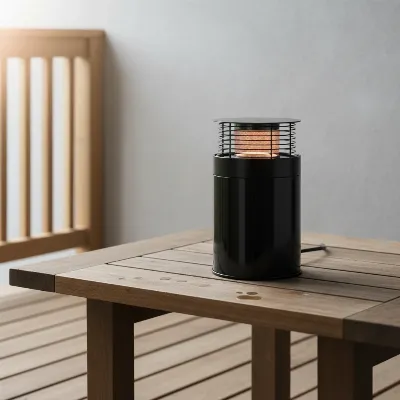 A close-up shot illustrating safe placement of a tabletop patio heater on a small deck, showing clear distances from furniture and overhead structures
Conclusion
Choosing the best tabletop patio heater for your small deck means finding the perfect balance between compact design, effective warmth, and unwavering safety. Whether you opt for the robust heat of a propane model or the clean convenience of an electric unit, the goal remains the same: to improve your modest outdoor space into a sanctuary of comfort. By understanding your needs, scrutinizing key features like heat output and safety mechanisms, and diligently following placement and maintenance guidelines, you can ensure your tabletop heater provides countless hours of cozy outdoor enjoyment. Don’t let the chill dictate your evenings; reclaim your deck and make every moment outdoors a warm one.
What kind of ambiance do you hope to create on your small deck with a tabletop patio heater?
Frequently Asked Questions
Are tabletop patio heaters safe on wooden decks?
Yes, tabletop patio heaters are generally safe for use on wooden decks, provided you follow the manufacturer’s specific instructions. The heat source is typically elevated, and the base of most models does not get hot enough to pose a fire risk to the deck surface. However, always ensure proper clearance from all surrounding materials.
How much heat do tabletop patio heaters typically produce?
Tabletop propane heaters usually generate between 8,000 and 12,000 BTUs, offering strong localized warmth. Electric tabletop heaters, on the other hand, typically range from 500 to 1,500 watts, providing sufficient heat for intimate, close-range comfort in smaller areas.
Which is better for a small deck: propane or electric tabletop heater?
For maximum heat and portability without needing an outlet, a propane tabletop heater is often preferred. For convenience, lower running costs, quiet operation, and no emissions, an electric tabletop heater is an excellent choice, especially if you have easy access to an outdoor power source.
Can I use a tabletop heater under a covered deck or pergola?
Using a tabletop heater under a covered deck or pergola requires extreme caution, particularly with propane or gas models, due to carbon monoxide risks and clearance requirements. Always ensure excellent ventilation and maintain the manufacturer’s specified overhead clearances. Electric models are generally safer in semi-enclosed spaces due to zero emissions but still require proper clearances.
How far should a tabletop patio heater be from furniture?
It is crucial to maintain a minimum clearance of 3 feet (approximately 1 meter) between your tabletop patio heater and any furniture, walls, railings, or other combustible materials. This ensures heat can dissipate safely and prevents potential fire hazards.
Frequently Asked Questions
Are tabletop patio heaters safe on wooden decks?
Yes, tabletop patio heaters are generally safe for use on wooden decks if manufacturer instructions are followed. The heat source is elevated, and the base typically does not get hot enough to pose a fire risk to the deck surface. Always ensure proper clearance from all surrounding materials, which is usually 3 feet.
How much heat do tabletop patio heaters typically produce?
Tabletop propane heaters usually generate between 8,000 and 12,000 BTUs, providing strong localized warmth. Electric tabletop heaters, on the other hand, typically range from 500 to 1,500 watts, offering sufficient heat for intimate, close-range comfort in smaller areas.
Which is better for a small deck: propane or electric tabletop heater?
For maximum heat output and superior portability without needing an electrical outlet, a propane tabletop heater is often preferred. For convenience, lower long-term running costs, quiet operation, and zero emissions, an electric tabletop heater is an excellent choice, especially with easy access to an outdoor power source.
Can I use a tabletop heater under a covered deck or pergola?
Using a tabletop heater under a covered deck or pergola requires extreme caution, particularly with propane or gas models, due to carbon monoxide risks and clearance requirements. Always ensure excellent ventilation and maintain the manufacturer's specified overhead clearances, typically 3 feet. Electric models are generally safer in semi-enclosed spaces due to zero emissions but still require proper clearances.
How far should a tabletop patio heater be from furniture?
It is crucial to maintain a minimum clearance of 3 feet (approximately 1 meter) between your tabletop patio heater and any furniture, walls, railings, or other combustible materials. This ensures heat can dissipate safely and prevents potential fire hazards, protecting both your property and guests.
Choose the Perfect Tabletop Patio Heater
Selecting the best tabletop patio heater for your small deck involves evaluating your specific needs, the characteristics of your deck, and key features like heat output and safety.
Consider your deck's size and layout, how often you'll use the heater, your budget for both purchase and running costs, and your aesthetic preferences. This initial assessment helps narrow down suitable options.
Ensure the heater provides adequate warmth for your intended area. For tabletop models, look for 8,000-12,000 BTUs for propane or 1,000-1,500 watts for electric units, which are sufficient for a tight radius of 5-7 feet.
Always look for essential safety features such as a tip-over switch that automatically shuts off the heater if it's knocked over, and an auto shut-off for overheating. A weighted base or means to secure the unit adds crucial stability for tabletop placement.
Think about how easy the heater is to move and if its design complements your outdoor decor. Look for compact dimensions and a manageable weight, especially if you plan to store it when not in use.
Opt for models made with durable materials like stainless steel or powder-coated finishes to resist rust and weathering. Simple ignition and straightforward fuel management (for propane) or plug-and-play operation (for electric) enhance the user experience and longevity.
Get our weekly buyer guide
Practical specs, not advice. Unsubscribe anytime.

We picked up a propane tabletop model for our deck, and the 10,000 BTUs it puts out is fantastic for those chilly evenings. It’s great for portability too, we can move it around easily. My only minor complaint is remembering to keep that 3-foot clearance from our umbrella, but safety first!
I got one of the smaller electric tabletop heaters, around 750 watts, for my tiny patio. It’s okay, but I was hoping for a bit more warmth. It definitely takes the edge off, but if it’s really cold, it’s not quite enough to keep us toasty. Still, it’s super compact and looks nice on the table.
I was looking for something to keep our small balcony cozy, and the electric tabletop heater I got is perfect. It really does warm up that 5-7 foot radius like it said, which is exactly what we needed for our little bistro set. So convenient to just plug it in and not worry about propane tanks.
This was super helpful! I finally decided on a propane tabletop heater after reading about the different fuel types. The convenience of not needing an outlet and the higher heat output for our small deck was the deciding factor. It’s made our outdoor dinners so much more enjoyable.