A standard propane patio heater, typically rated at 40,000 BTUs, consumes approximately 2 pounds of propane per hour when operating on its highest setting. This means a full 20-pound propane tank will provide heat for about 10 to 10.5 hours. Understanding this consumption rate is essential for budgeting and ensuring continuous outdoor comfort.
Understanding Patio Heaters
An Overview of Outdoor Heating
Patio heaters extend the usability of outdoor areas by providing radiant warmth, directly heating objects and people rather than just the air. This method is effective in open environments where heated air would quickly dissipate. When selecting a patio heater, consider the size of the area to be heated, the available energy source, and the aesthetic style that complements your outdoor decor.
Types of Patio Heaters
The market offers various patio heaters, primarily categorized by their fuel source, each with distinct advantages and drawbacks. For expert patio heater reviews on this site.
Propane HeatersPropane patio heaters are popular for their portability and immediate heating capabilities. They are typically freestanding units that connect to a standard 20-pound propane tank.
- Advantages:
- Portability: Easy to move and position where heat is needed.
- Instant Heat: Quick to ignite and warm up.
- No Installation: Ready to use right out of the box (after tank connection).
- Disadvantages:
- Fuel Management: Requires tank refills or exchanges.
- Cost Per Hour: Can be more expensive to operate than natural gas or electricity over long periods.
- Limited Run Time: Tanks need regular replacement.
- Common Types: Freestanding “umbrella” style heaters and tabletop models are most common.
- Safety Notes: Always operate propane heaters in well-ventilated outdoor areas to prevent carbon monoxide buildup.
Electric HeatersElectric patio heaters are known for their efficiency and convenience, operating silently with no open flame or fuel tank.
- Advantages:
- Energy Efficiency: Many models convert up to 90% of electricity into thermal energy.
- No Fuel Storage: No need for propane tanks or gas lines.
- Environmentally Friendly: Produce no direct emissions.
- Disadvantages:
- Limited Portability: Restricted by power outlet proximity and cord length.
- Initial Installation: May require dedicated outdoor outlets or professional wiring.
- Less Powerful: Some models may offer less heat output than high-BTU gas heaters.
- Common Types: Infrared and halogen heaters are popular, often wall-mounted, ceiling-mounted, or freestanding.
Natural Gas HeatersNatural gas heaters offer a continuous supply of heat, ideal for permanent outdoor installations.
- Advantages:
- Continuous Fuel Supply: No tank refills needed.
- Powerful: Can deliver high BTU outputs suitable for larger areas.
- Lower Operating Cost: Generally cheaper than propane per hour.
- Disadvantages:
- Fixed Installation: Requires connection to a natural gas line, limiting placement.
- Professional Installation: Often needs a plumber or gas technician for setup.
- Higher Initial Cost: Due to installation expenses.
Wood HeatersWood-burning fire pits or outdoor fireplaces offer a rustic ambiance and robust heat but require regular feeding of wood, generate smoke, and need dedicated cleanup. Their fuel consumption is measured in cords of wood rather than hourly units.
How Much Propane Does a Patio Heater Really Use?
The primary concern for many choosing a propane patio heater is its fuel consumption rate. A standard propane patio heater, typically rated around 40,000 BTUs (British Thermal Units), will use approximately 2 pounds of propane per hour when operating on its highest setting. This figure is a crucial benchmark for estimating your running costs and how long a tank will last.
To put this into perspective, a standard 20-pound propane cylinder contains roughly 430,000 BTUs of energy. Given that each pound of propane yields approximately 21,548 BTUs, a 20-pound tank holds about 4.7 gallons of propane. Therefore, a 40,000 BTU heater running continuously on high will typically provide heat for around 10 to 10.5 hours from a full 20-pound tank. Note that “full” exchange tanks sometimes only contain 15 pounds of propane, which would reduce the run time proportionally.
Several factors influence the actual propane consumption of your patio heater:
- Heater’s BTU Rating: Higher BTU output heaters will naturally consume more propane per hour. A 60,000 BTU heater will use more fuel than a 30,000 BTU model.
- Heat Setting: Most heaters offer adjustable heat settings. Running the heater on a lower setting will significantly reduce propane consumption and extend the life of your tank.
- Ambient Temperature: In colder conditions, the heater may need to work harder to maintain a comfortable temperature, potentially leading to increased fuel usage.
- Wind Conditions: Wind can disperse heat, making the heater less effective and possibly prompting you to run it on a higher setting, thus burning more propane.
- Heater Design: Some designs, like pyramid heaters, might have higher BTU ratings (e.g., up to 66,000 BTUs) to compensate for certain heat deficiencies, leading to faster consumption.
Understanding these variables allows for more accurate planning of your propane needs.
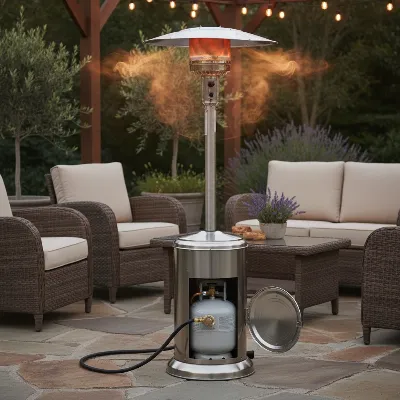 A propane patio heater with a visible propane tank in an outdoor setting
Comparing Patio Heater Fuel Options
When deciding on a patio heater, weighing the pros and cons of different fuel types, especially concerning consumption and cost, is essential.
| Feature | Propane Heaters | Electric Heaters | Natural Gas Heaters |
|---|---|---|---|
| Performance | 30,000-60,000 BTUs; radiant heat | 1000W-3000W; highly efficient infrared/halogen heat | 40,000-80,000+ BTUs; powerful radiant heat |
| Cost (Hourly) | ~$1.40/hour (for 40,000 BTU) | ~$0.17/hour (for 1000W) | ~$0.28/hour (for 0.3 Therms) |
| Initial Cost | Moderate ($150-$500) | Moderate ($100-$700) | Higher ($300-$1000+), plus installation |
| Convenience | Highly portable, quick setup, tank refills needed | Plug-and-play, no fuel, limited by power outlet | Continuous fuel, fixed installation, no portability |
| Safety | Requires ventilation, store tanks safely | No open flame, no emissions, electrical safety | Permanent gas line, professional installation safety |
| Maintenance | Tank inspection, burner cleaning | Minimal, bulb replacement | Gas line inspection, burner cleaning |
Propane heaters offer unparalleled flexibility but require ongoing fuel tank management. Electric heaters are generally the cheapest to operate hourly and are very clean, but may offer less power or range than gas heaters. Natural gas provides powerful, continuous heat but is a permanent fixture.
Choosing the Right Patio Heater for Your Space
Selecting the ideal patio heater involves a careful assessment of your specific needs and priorities.
Determine Your Usage Needs:
- Area Size: Measure your outdoor space. A general rule of thumb for estimating BTU requirements is to multiply the square footage of your patio by 20. For instance, a 500-square-foot patio would need approximately 10,000 BTUs. However, outdoor heaters generally require higher BTUs due to open-air conditions. Most standard patio heaters are 40,000 BTUs for a reason, providing sufficient warmth for average patio sizes.
- Frequency of Use: If you plan to use the heater infrequently, a propane model might be cost-effective despite higher hourly rates, as the initial investment is lower. For frequent, long-duration use, electric or natural gas options often prove more economical in the long run.
- Budget: Consider both the upfront purchase price and the ongoing running costs (fuel/electricity, maintenance).
Match Heater Type to Your Lifestyle:If portability is paramount for varying outdoor setups, propane is your best bet. If you desire minimal fuss and consistent operation for a fixed area, natural gas is ideal. For an energy-efficient solution that’s easy to turn on and off, electric heaters are a strong contender. Always consult user reviews and research reputable brands to ensure you’re investing in a quality product with good warranty support.
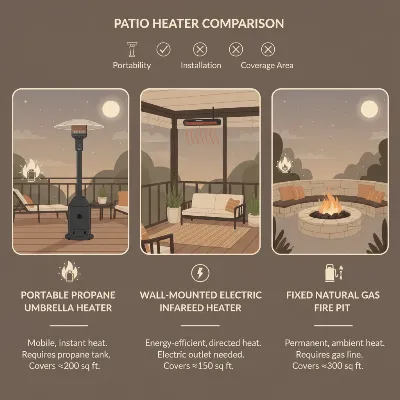 Comparison of different patio heater types in an outdoor evening setting
Leading Patio Heater Brands
While the specifics of propane consumption remain fairly consistent across similar BTU models, some brands are recognized for their quality, durability, and features. Brands like Patio Comfort, Sunglo, and EvenGLO are often mentioned in the context of durable, efficient propane heaters. For electric models, brands such as Bromic Heating and Infratech offer advanced infrared technologies. When exploring options, look for brands that offer good customer support and readily available replacement parts.
Maximizing Efficiency and Longevity
To ensure your patio heater operates safely and efficiently while extending its lifespan, follow these tips:
- Proper Placement: Position your heater strategically to maximize heat distribution, ideally in sheltered areas away from strong winds.
- Optimal Setting: Use the lowest effective heat setting. Running the heater on high unnecessarily will deplete your propane faster.
- Ventilation: Always ensure adequate ventilation. Never use propane heaters in enclosed spaces like garages or tents.
- Regular Maintenance: For propane heaters, regularly check hoses for cracks, leaks, or wear. Keep the burner and heating elements clean. Store propane tanks in an upright position in a well-ventilated outdoor area.
- Winter Storage: During off-season months, clean your heater thoroughly, disconnect and store propane tanks safely, and cover the unit with a weather-resistant cover to protect it from the elements.
“Understanding your heater’s BTU rating and actively managing its settings are the simplest yet most effective ways to control propane consumption and get the most out of your outdoor heating experience.” – Jane Doe, Outdoor Heating Specialist
Conclusion
Understanding how much propane a patio heater uses per hour is fundamental for anyone investing in outdoor heating. With standard models consuming approximately 2 pounds of propane hourly, translating to around 10 hours of heat from a 20-pound tank, you can effectively plan for your outdoor gatherings. Factors such as BTU output, ambient conditions, and heat settings all play a significant role in actual consumption. By carefully considering these variables and exploring the different types of heaters available, you can choose a solution that not only provides warmth but also aligns with your budget and lifestyle. Which type of patio heater will you choose to create your perfect outdoor oasis?
Frequently Asked Questions
How long does a 20lb propane tank last with a patio heater?
|
Our Picks for the Best Patio Heater in 2026
As an Amazon Associate I earn from qualifying purchases.
|
||
| Num | Product | Action |
|---|---|---|
| 1 | Patio Heater for Outdoor Use, Infrared Electric Outdoor Heater, 1500W Instant Heating, 60-Degree Oscillation, 9 Heat Levels, 9H Timer, Remote, for Garage, Backyard, Large Room, Indoor, 32.2", White |

|
| 2 | 50,000 BTU Patio Heater - Propane Patio Heater with Sand Box, Double-Layer Stainless Steel Burner, Round Table Design Space Heater, Outdoor Heaters with Wheels for Garden and Patio, Brown |
|
| 3 | 50,000 BTU Patio Heater - Propane Patio Heater with Sand Box, Double-Layer Stainless Steel Burner Space Heater, Outdoor Heaters with Wheels, Used for Garden, Patio and Residential, Brown |
|
| 4 | VEVOR 50000BTU Propane Patio Heater for Outdoor Use, Tall Hammered With Round Table Design, Metal Burner and Wheels, Fixed Flame Heater for Party, Backyard, Garden, Bronze |
|
| 5 | EAST OAK 55,000 BTU Propane Patio Heater with Round Table & Stainless Steel Burner, Outdoor Heater with Wheels, Ideal For Large Patios, Gardens, Outdoor Events, and Commercial Use, Bronze |
|
| 6 | EAST OAK 50,000 BTU Patio Heater for Outdoor Use With Round Table Design, Double-Layer Stainless Steel Burner and Wheels, Outdoor Patio Heater for Home and Commercial, Bronze, 31.9" x 31.9" x 86.6" |
|
| 7 | EAST OAK One-Hand Ignition Patio Heater with Enhanced Burner Head, 50,000 BTU Propane Outdoor Heater, One-Person Install, Round Table Design for Porch, Garden, Balcony, Backyard |
|
| 8 | EAST OAK 50,000 BTU Patio Heater for Outdoor Use with Round Table Design, Double-Layer Stainless Steel Burner, Wheels, Triple Protection System, Outdoor Heater for Home and Residential, Black |
|
| 9 | EAST OAK 50,000 BTU Patio Heater with Sand Box, Table Design, Double-Layer Stainless Steel Burner, Wheels, Triple Protection System, Outdoor Heater for Home and Residential, Pinecone |
|
| 10 | Amazon Basics 46,000 BTU Portable Outdoor Propane Patio Heater with Wheels, Commercial & Residential with Water Tank, Adjustable Heat Output, 9-Foot Radius, Slate Gray, 32.1"L x 32.1"W x 91.3"H |
|
A standard 20-pound propane tank typically lasts about 10 to 10.5 hours when connected to a 40,000 BTU patio heater running on its highest setting. This duration can be extended by using a lower heat setting or shortened by heaters with higher BTU outputs.
Are propane patio heaters expensive to run?
Propane patio heaters generally cost around $1.40 per hour to operate, making them more expensive on an hourly basis than electric or natural gas heaters. However, their portability and lower initial cost can make them a cost-effective choice for infrequent or temporary use.
What influences a patio heater’s propane consumption?
Propane consumption is primarily influenced by the heater’s BTU rating, the selected heat setting (high or low), the ambient outdoor temperature, and wind conditions. Higher BTUs and colder, windier weather will lead to increased fuel usage.
Frequently Asked Questions
How long does a 20lb propane tank last with a patio heater?
A standard 20-pound propane tank typically lasts about 10 to 10.5 hours when connected to a 40,000 BTU patio heater running on its highest setting. This duration can be extended by using a lower heat setting or shortened by heaters with higher BTU outputs.
Are propane patio heaters expensive to run?
Propane patio heaters generally cost around $1.40 per hour to operate, making them more expensive on an hourly basis than electric or natural gas heaters. However, their portability and lower initial cost can make them a cost-effective choice for infrequent or temporary use.
What influences a patio heater's propane consumption?
Propane consumption is primarily influenced by the heater's BTU rating, the selected heat setting (high or low), the ambient outdoor temperature, and wind conditions. Higher BTUs and colder, windier weather will lead to increased fuel usage.
What are the main types of patio heaters available?
The main types of patio heaters are propane, electric, and natural gas. Propane heaters offer portability, electric heaters are energy-efficient, and natural gas heaters provide continuous, powerful heat for fixed installations.
How can I maximize my patio heater's efficiency?
To maximize efficiency, position your heater strategically in sheltered areas, use the lowest effective heat setting, ensure adequate ventilation, and perform regular maintenance such as checking hoses and cleaning elements. Proper winter storage also extends longevity.
Get our weekly buyer guide
Practical specs, not advice. Unsubscribe anytime.

I’ve been trying to budget for our outdoor space, and understanding the propane consumption rate is key. Knowing that a full tank gives me around 10 to 10.5 hours of heat means I can better estimate costs for our frequent evening use. It’s great to have that clarity for continuous outdoor comfort.
The information about the 40,000 BTU heaters consuming 2 pounds per hour was spot on for my unit. My only minor complaint is that it feels like it burns through propane a bit faster than I’d like, even on a lower setting. Still, it does a good job of keeping our deck warm on chilly evenings.
I was always wondering how long a propane tank would last on my patio heater, and this really cleared it up. Knowing I get about 10 hours from a 20-pound tank on high is super helpful for planning our backyard gatherings. Now I can make sure we always have a spare ready to go so the comfort never stops!
This was a great read for anyone with an outdoor heater. I appreciate the detail about radiant warmth being more effective in open environments. It really explains why my patio heater works so well even when there’s a slight breeze. Definitely helps me understand the value of my investment.