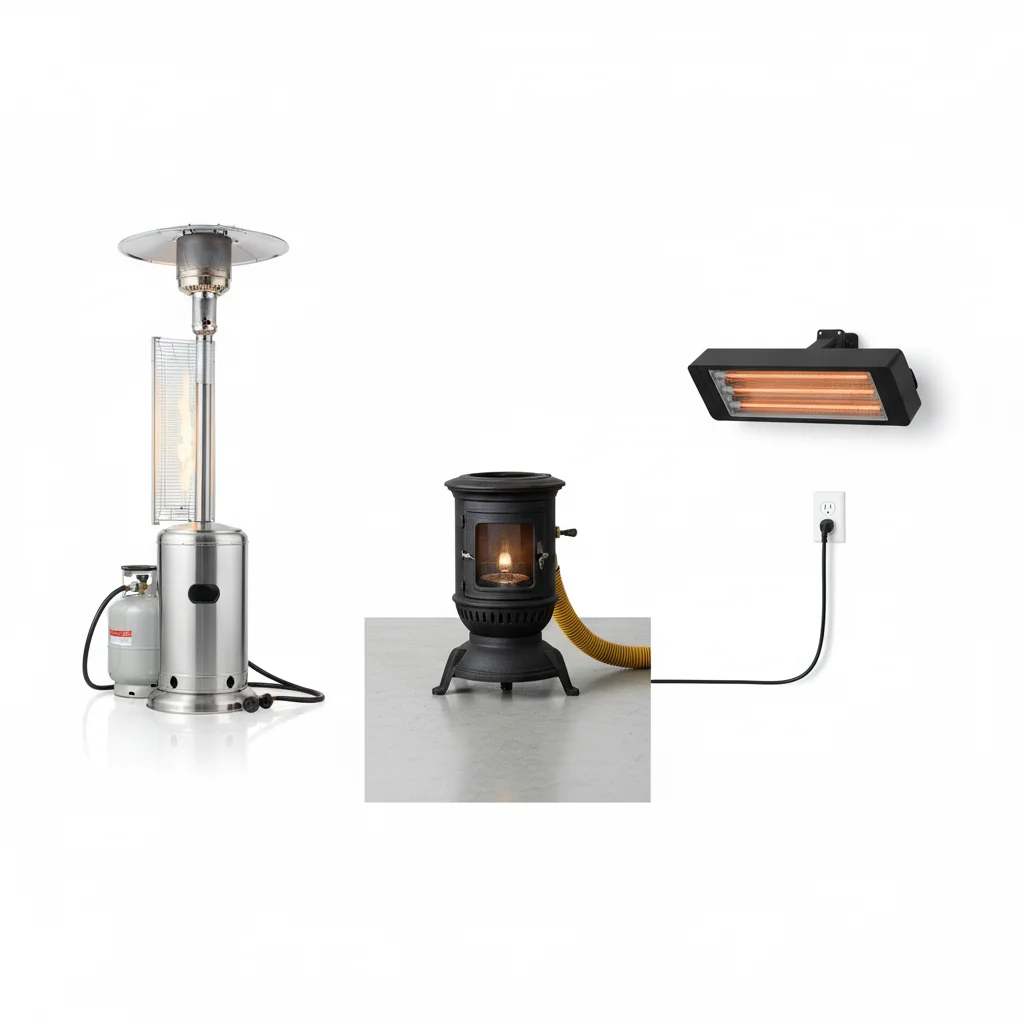
When choosing a patio heater, understanding the different fuel options—propane, natural gas, and electric—is crucial for both performance and convenience. Each type offers distinct advantages and disadvantages in terms of heat output, portability, installation, and operating costs. For most homeowners seeking flexibility and immediate warmth, propane models are a popular choice due to their portability and ease of setup.
Propane Patio Heaters: Portability and Power
Propane patio heaters are widely favored for their mobility and robust heat output. They operate using standard propane tanks, similar to those used for BBQ grills, making them easy to refuel and relocate as needed. A typical 20-pound propane tank can power a standard patio heater for approximately 8-10 hours on a medium setting, providing ample warmth for an evening gathering. These heaters often come in various designs, including freestanding mushroom-style units and pyramid flame heaters, offering both functionality and aesthetic appeal. The main consideration for propane is the need to store and replace tanks, which can be a minor inconvenience for frequent users.
Natural Gas Patio Heaters: Continuous Comfort
Natural gas patio heaters offer the ultimate convenience of continuous operation without the need for refueling. They connect directly to your home’s natural gas line, providing an uninterrupted supply of fuel. This makes them ideal for permanent outdoor installations, such as large patios or commercial spaces where consistent heat is desired. While the initial installation cost can be higher due to the need for professional gas line hookup, the long-term operating costs are generally lower than propane. Natural gas heaters are typically less portable once installed, making them a fixed feature of your outdoor living area.
Electric Patio Heaters: Clean and Quiet
|
Our Picks for the Best Patio Heater in 2026
As an Amazon Associate I earn from qualifying purchases.
|
||
| Num | Product | Action |
|---|---|---|
| 1 | Patio Heater for Outdoor Use, Infrared Electric Outdoor Heater, 1500W Instant Heating, 60-Degree Oscillation, 9 Heat Levels, 9H Timer, Remote, for Garage, Backyard, Large Room, Indoor, 32.2", White |

|
| 2 | EAST OAK 50,000 BTU Patio Heater with Sand Box, Table Design, Double-Layer Stainless Steel Burner, Wheels, Triple Protection System, Outdoor Heater for Home and Residential, Pinecone |
|
| 3 | EAST OAK 50,000 BTU Patio Heater for Outdoor Use with Round Table Design, Double-Layer Stainless Steel Burner, Wheels, Triple Protection System, Outdoor Heater for Home and Residential, Black |
|
| 4 | 50,000 BTU Patio Heater - Propane Patio Heater with Sand Box, Double-Layer Stainless Steel Burner, Round Table Design Space Heater, Outdoor Heaters with Wheels for Garden and Patio, Brown |
|
| 5 | Amazon Basics 46,000 BTU Portable Outdoor Propane Patio Heater with Wheels, Commercial & Residential with Water Tank, Adjustable Heat Output, 9-Foot Radius, Slate Gray, 32.1"L x 32.1"W x 91.3"H |
|
| 6 | EAST OAK 55,000 BTU Propane Patio Heater with Round Table & Stainless Steel Burner, Outdoor Heater with Wheels, Ideal For Large Patios, Gardens, Outdoor Events, and Commercial Use, Bronze |
|
| 7 | 50,000 BTU Patio Heater - Propane Patio Heater with Sand Box, Double-Layer Stainless Steel Burner Space Heater, Outdoor Heaters with Wheels, Used for Garden, Patio and Residential, Brown |
|
| 8 | VEVOR 50000BTU Propane Patio Heater for Outdoor Use, Tall Hammered With Round Table Design, Metal Burner and Wheels, Fixed Flame Heater for Party, Backyard, Garden, Bronze |
|
| 9 | EAST OAK One-Hand Ignition Patio Heater with Enhanced Burner Head, 50,000 BTU Propane Outdoor Heater, One-Person Install, Round Table Design for Porch, Garden, Balcony, Backyard |
|
| 10 | EAST OAK 50,000 BTU Patio Heater for Outdoor Use With Round Table Design, Double-Layer Stainless Steel Burner and Wheels, Outdoor Patio Heater for Home and Commercial, Bronze, 31.9" x 31.9" x 86.6" |
|
Electric patio heaters are an excellent choice for smaller, enclosed outdoor spaces or areas where gas fuel is not practical. They are clean, quiet, and produce no emissions, making them suitable for covered patios, balconies, or even sunrooms. Electric heaters come in various forms, including wall-mounted, ceiling-mounted, and freestanding models, offering flexibility in placement. While their heat output might be less intense than gas-powered units, they provide a consistent and comfortable warmth. The primary considerations for electric heaters are their reliance on an electrical outlet and potentially higher operating costs compared to natural gas, depending on local electricity rates.
Comparing Key Factors: Which is Right for You?
When deciding between propane, natural gas, and electric patio heaters, consider these key factors:
- Heat Output: Propane and natural gas generally offer higher BTU outputs for larger areas.
- Portability: Propane heaters are highly portable; electric can be somewhat portable; natural gas is fixed.
- Installation: Electric is plug-and-play; propane requires tank connection; natural gas needs professional line installation.
- Operating Cost: Natural gas is often the cheapest long-term; electric and propane costs vary by region and usage.
- Environmental Impact: Electric heaters produce zero on-site emissions; gas heaters produce some.
Ultimately, the best patio heater fuel option depends on your specific needs, the size of your outdoor space, and your preference for convenience versus cost. Evaluate your priorities to select the heater that will provide the most comfortable and efficient outdoor heating solution for your home.
Get our weekly buyer guide
Practical specs, not advice. Unsubscribe anytime.
