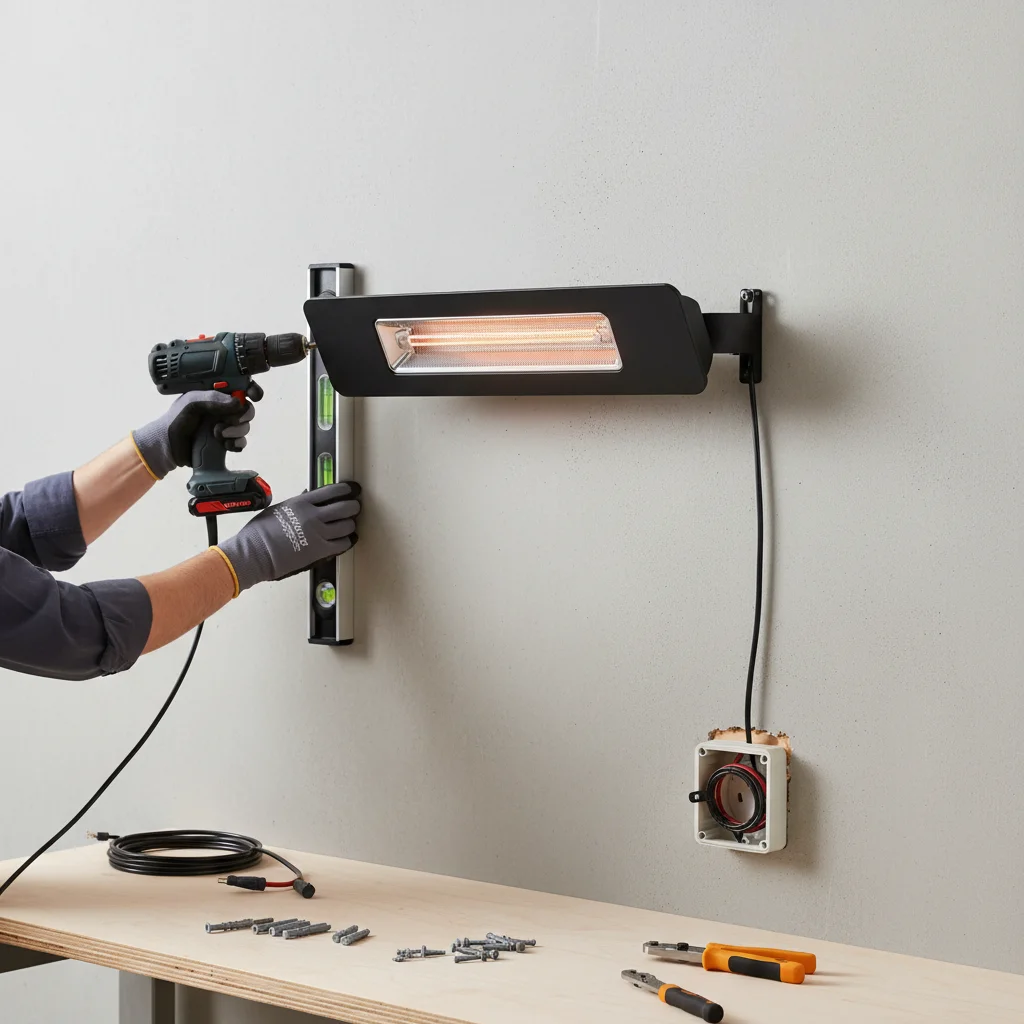
Installing a patio heater can be a straightforward DIY project for many homeowners, depending on the type of heater and your comfort level with basic tools. While electric plug-in models are often the easiest, requiring little more than proper placement and an outlet, natural gas and hardwired electric units typically necessitate professional installation due to safety and code requirements. For most propane patio heaters, you can complete the setup yourself in under an hour with common household tools.
Understanding Different Patio Heater Types and Installation Needs
Patio heaters come in several varieties, each with distinct installation considerations. Propane heaters are generally portable and require connecting a propane tank, a task easily managed by most. Electric heaters, especially those designed for wall or ceiling mounting, might involve more complex wiring if they aren’t simple plug-in models. Natural gas heaters, which connect directly to your home’s gas line, always demand professional installation to ensure safety and compliance with local building codes. Mismanaging gas lines can lead to dangerous leaks or carbon monoxide hazards. For explore our patio heater reviews on this site.
DIY Installation for Propane Patio Heaters
For a standard freestanding propane patio heater, the DIY installation process typically involves assembling the base, attaching the main heating unit, and connecting the propane tank. First, ensure all parts are present and undamaged. Assemble the base according to the manufacturer’s instructions, often involving a few screws and a stable platform for the tank. Next, secure the heating element to the pole. Finally, carefully connect the regulator hose to the propane tank valve, tightening it by hand and then with a wrench, being careful not to overtighten. Always perform a leak test with soapy water before lighting the heater.
When to Call a Professional for Patio Heater Installation
|
Our Picks for the Best Patio Heater in 2026
As an Amazon Associate I earn from qualifying purchases.
|
||
| Num | Product | Action |
|---|---|---|
| 1 | VEVOR 50000BTU Propane Patio Heater for Outdoor Use, Tall Hammered With Round Table Design, Metal Burner and Wheels, Fixed Flame Heater for Party, Backyard, Garden, Bronze |

|
| 2 | Patio Heater for Outdoor Use, Infrared Electric Outdoor Heater, 1500W Instant Heating, 60-Degree Oscillation, 9 Heat Levels, 9H Timer, Remote, for Garage, Backyard, Large Room, Indoor, 32.2", White |
|
| 3 | EAST OAK One-Hand Ignition Patio Heater with Enhanced Burner Head, 50,000 BTU Propane Outdoor Heater, One-Person Install, Round Table Design for Porch, Garden, Balcony, Backyard |
|
| 4 | 50,000 BTU Patio Heater - Propane Patio Heater with Sand Box, Double-Layer Stainless Steel Burner, Round Table Design Space Heater, Outdoor Heaters with Wheels for Garden and Patio, Brown |
|
| 5 | 50,000 BTU Patio Heater - Propane Patio Heater with Sand Box, Double-Layer Stainless Steel Burner Space Heater, Outdoor Heaters with Wheels, Used for Garden, Patio and Residential, Brown |
|
| 6 | EAST OAK 50,000 BTU Patio Heater for Outdoor Use with Round Table Design, Double-Layer Stainless Steel Burner, Wheels, Triple Protection System, Outdoor Heater for Home and Residential, Black |
|
| 7 | Amazon Basics 46,000 BTU Portable Outdoor Propane Patio Heater with Wheels, Commercial & Residential with Water Tank, Adjustable Heat Output, 9-Foot Radius, Slate Gray, 32.1"L x 32.1"W x 91.3"H |
|
| 8 | EAST OAK 50,000 BTU Patio Heater with Sand Box, Table Design, Double-Layer Stainless Steel Burner, Wheels, Triple Protection System, Outdoor Heater for Home and Residential, Pinecone |
|
| 9 | EAST OAK 50,000 BTU Patio Heater for Outdoor Use With Round Table Design, Double-Layer Stainless Steel Burner and Wheels, Outdoor Patio Heater for Home and Commercial, Bronze, 31.9" x 31.9" x 86.6" |
|
| 10 | EAST OAK 55,000 BTU Propane Patio Heater with Round Table & Stainless Steel Burner, Outdoor Heater with Wheels, Ideal For Large Patios, Gardens, Outdoor Events, and Commercial Use, Bronze |
|
While some patio heaters are DIY-friendly, others absolutely require professional help. Any heater that needs to be hardwired into your home’s electrical system, or connected to a natural gas line, should be installed by a licensed electrician or plumber, respectively. These professionals ensure that the installation meets all safety standards, local codes, and manufacturer specifications, preventing potential hazards like electrical fires or gas leaks. Attempting these installations without proper training and certification can void warranties and pose significant risks to your property and safety.
Essential Safety Checks After Installation
Regardless of who installs your patio heater, performing essential safety checks before its first use is crucial. For propane heaters, always conduct a leak test on all gas connections using a soapy water solution; bubbles indicate a leak. Ensure the heater is placed on a stable, level surface, away from combustible materials like curtains, awnings, or low-hanging branches. Maintain adequate clearance from walls and ceilings as specified by the manufacturer. For electric heaters, verify that the power cord is not frayed and is plugged into a grounded outlet. Always keep children and pets away from the heater during operation.
Tools and Materials for DIY Patio Heater Setup
- Adjustable wrench
- Screwdriver set (Phillips and flathead)
- Soapy water solution (for leak testing propane)
- Work gloves
- Owner’s manual
Get our weekly buyer guide
Practical specs, not advice. Unsubscribe anytime.
