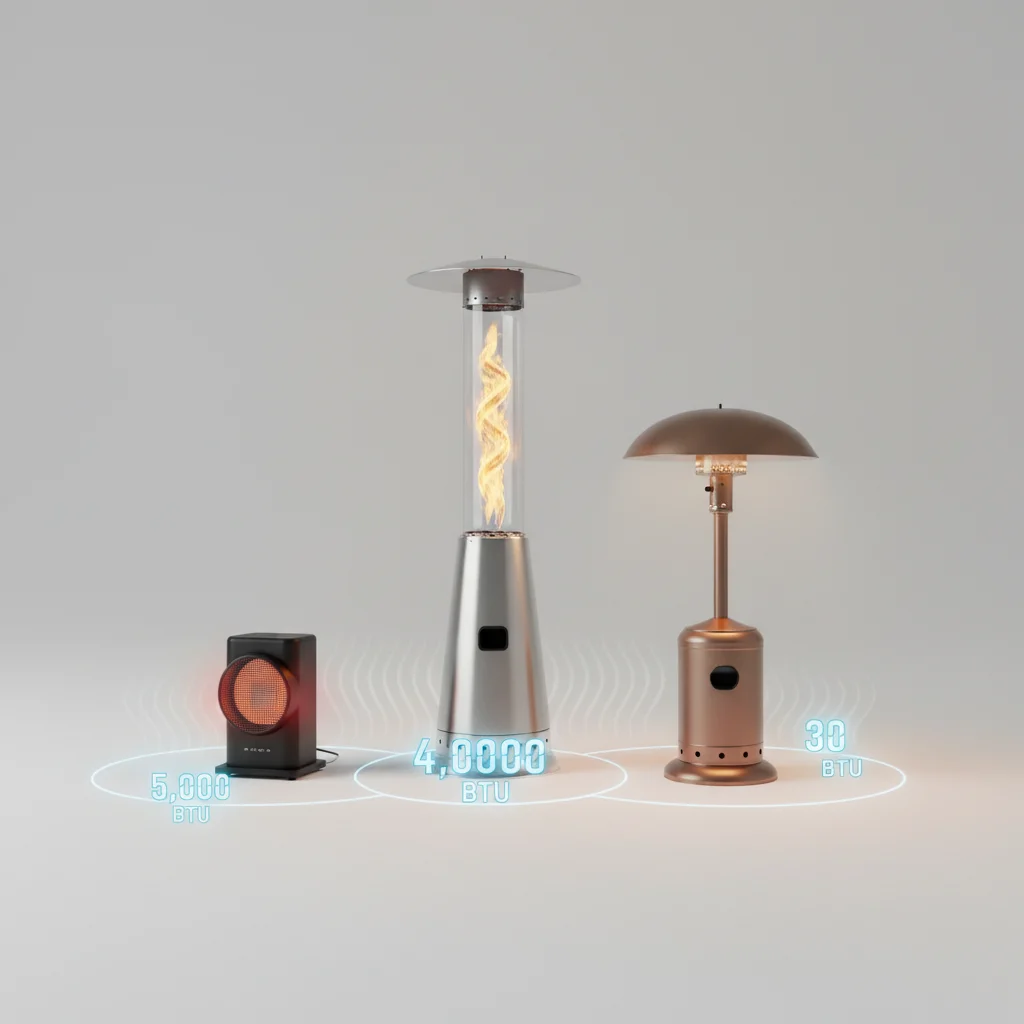
To determine the correct patio heater BTU (British Thermal Units) for your outdoor space, you generally need approximately 20-25 BTU per square foot for optimal comfort. This calculation helps ensure efficient heating without wasted energy or insufficient warmth, making it crucial for selecting the right size heater for your patio.
What is BTU and Why Does it Matter for Patio Heaters?
BTU is a standard unit of measurement for heat energy. For patio heaters, it indicates the amount of heat the unit can produce; a higher BTU rating means more heat output. Choosing the correct BTU is vital because an underpowered heater won’t adequately warm your area, while an overpowered one will consume more fuel or electricity than necessary, potentially making the space uncomfortably hot and inefficient.
Factors like ambient temperature, wind exposure, and whether your patio is covered or open-air all influence the effective BTU needed. For instance, a patio in a colder climate or one exposed to frequent breezes will require a higher BTU output compared to a sheltered patio in a milder region.
Calculating Your Patio Heater BTU Needs
To determine the ideal BTU for your patio, first measure the square footage of the area you wish to heat by multiplying the length by the width. Then, multiply this square footage by a factor of 20 to 25. For example, a 10×10 foot patio (100 sq ft) would require a heater with 2,000 to 2,500 BTU. This is a baseline; consider adding 5-10 BTU per square foot for colder climates or exposed areas.
For partially enclosed spaces, the BTU requirement might be slightly lower, as some heat will be retained. However, always ensure adequate ventilation when using gas-powered heaters in any enclosed or semi-enclosed area to prevent carbon monoxide buildup.
Common BTU Ranges for Different Patio Sizes
|
Our Picks for the Best Patio Heater in 2026
As an Amazon Associate I earn from qualifying purchases.
|
||
| Num | Product | Action |
|---|---|---|
| 1 | VEVOR 50000BTU Propane Patio Heater for Outdoor Use, Tall Hammered With Round Table Design, Metal Burner and Wheels, Fixed Flame Heater for Party, Backyard, Garden, Bronze |

|
| 2 | Patio Heater for Outdoor Use, Infrared Electric Outdoor Heater, 1500W Instant Heating, 60-Degree Oscillation, 9 Heat Levels, 9H Timer, Remote, for Garage, Backyard, Large Room, Indoor, 32.2", White |
|
| 3 | 50,000 BTU Patio Heater - Propane Patio Heater with Sand Box, Double-Layer Stainless Steel Burner, Round Table Design Space Heater, Outdoor Heaters with Wheels for Garden and Patio, Brown |
|
| 4 | EAST OAK 50,000 BTU Patio Heater for Outdoor Use with Round Table Design, Double-Layer Stainless Steel Burner, Wheels, Triple Protection System, Outdoor Heater for Home and Residential, Black |
|
| 5 | 50,000 BTU Patio Heater - Propane Patio Heater with Sand Box, Double-Layer Stainless Steel Burner Space Heater, Outdoor Heaters with Wheels, Used for Garden, Patio and Residential, Brown |
|
| 6 | EAST OAK One-Hand Ignition Patio Heater with Enhanced Burner Head, 50,000 BTU Propane Outdoor Heater, One-Person Install, Round Table Design for Porch, Garden, Balcony, Backyard |
|
| 7 | Amazon Basics 46,000 BTU Portable Outdoor Propane Patio Heater with Wheels, Commercial & Residential with Water Tank, Adjustable Heat Output, 9-Foot Radius, Slate Gray, 32.1"L x 32.1"W x 91.3"H |
|
| 8 | EAST OAK 50,000 BTU Patio Heater with Sand Box, Table Design, Double-Layer Stainless Steel Burner, Wheels, Triple Protection System, Outdoor Heater for Home and Residential, Pinecone |
|
| 9 | EAST OAK 55,000 BTU Propane Patio Heater with Round Table & Stainless Steel Burner, Outdoor Heater with Wheels, Ideal For Large Patios, Gardens, Outdoor Events, and Commercial Use, Bronze |
|
| 10 | EAST OAK 50,000 BTU Patio Heater for Outdoor Use With Round Table Design, Double-Layer Stainless Steel Burner and Wheels, Outdoor Patio Heater for Home and Commercial, Bronze, 31.9" x 31.9" x 86.6" |
|
Patio heaters come in a wide range of BTU outputs, catering to various outdoor spaces. Small tabletop electric heaters might offer 5,000-10,000 BTU, suitable for very localized warmth. Medium-sized propane or electric heaters typically range from 20,000-40,000 BTU, ideal for average residential patios. Larger commercial-grade units can exceed 50,000 BTU, designed for extensive outdoor dining areas or large event spaces.
- Small Patios (up to 100 sq ft): 20,000 – 30,000 BTU
- Medium Patios (100-200 sq ft): 30,000 – 45,000 BTU
- Large Patios (200-300 sq ft): 45,000 – 60,000 BTU
- Very Large/Commercial Patios (300+ sq ft): 60,000+ BTU
Remember that these are general guidelines. Always consult the manufacturer’s specifications and consider your specific environmental conditions.
Electric vs. Propane BTU: Key Differences
While both electric and propane patio heaters use BTU as a measure of heat output, their efficiency and how that heat is delivered can differ. Propane heaters often have higher BTU ratings and are excellent for quickly heating larger, open spaces. They provide radiant heat that warms objects and people directly.
Electric heaters, especially infrared models, also provide radiant heat but typically have lower BTU ratings. However, they can be very efficient for smaller, more contained areas and offer instant heat without the need for fuel tanks. When comparing, consider the cost of electricity versus propane in your region, as well as the convenience of each fuel type.
Factors Beyond BTU for Optimal Comfort
While BTU is a primary consideration, other factors contribute to overall outdoor comfort. The type of heat (radiant vs. convective), the heater’s design (e.g., mushroom, pyramid, wall-mounted), and its placement all play a role. Radiant heaters are generally more effective outdoors as they directly warm people and objects, rather than trying to heat the air, which can easily dissipate in open environments.
Consider features like adjustable heat settings, safety shut-off mechanisms, and portability. A heater with multiple heat levels allows you to fine-tune the warmth to suit changing conditions. Proper placement, away from flammable materials and in a location where heat can spread effectively, is also critical for both safety and performance.
Frequently Asked Questions
How do I calculate the correct BTU for my patio heater?
To calculate the correct BTU, measure your patio's square footage (length x width) and multiply it by 20 to 25. For example, a 100 sq ft patio needs 2,000 to 2,500 BTU. Add 5-10 BTU per square foot for colder climates or exposed areas.
What is the difference between electric and propane patio heater BTU?
Propane patio heaters often have higher BTU ratings and are effective for larger, open spaces, providing radiant heat. Electric heaters, particularly infrared models, typically have lower BTU ratings but are efficient for smaller, contained areas and offer instant heat without fuel tanks.
What BTU range is suitable for a medium-sized patio?
For a medium-sized patio, typically 100-200 square feet, a patio heater with a BTU range of 30,000 to 45,000 BTU is generally suitable. This range provides ample warmth for average residential outdoor spaces.
Do environmental factors affect the BTU needed for a patio heater?
Yes, environmental factors significantly affect the BTU needed. Colder climates, wind exposure, and open-air patios require higher BTU output. Sheltered patios in milder regions may need less BTU to achieve optimal comfort.
Are there other important factors besides BTU for patio heater comfort?
Beyond BTU, consider the type of heat (radiant is best for outdoors), heater design, and placement. Features like adjustable heat settings and safety shut-off mechanisms also contribute to overall comfort and safe operation.
Calculate Your Patio Heater BTU Needs
Determine the ideal British Thermal Units (BTU) for your patio heater to ensure efficient and effective outdoor heating.
First, measure the length and width of your outdoor space. Multiply these two measurements to get the total square footage of the area you intend to heat.
Multiply your patio's square footage by a factor of 20 to 25. This provides a baseline BTU requirement for optimal comfort in typical patio settings.
For colder climates or areas frequently exposed to wind, consider adding an additional 5-10 BTU per square foot to your baseline calculation. This adjustment accounts for heat loss due to external conditions.
Get our weekly buyer guide
Practical specs, not advice. Unsubscribe anytime.

I was so confused about BTU before reading this! My old heater just wasn’t cutting it for our open-air patio, and now I understand why. I used the 25 BTU per square foot guideline and finally got a heater that actually keeps us warm on chilly evenings. It’s made such a difference for our outdoor gatherings.
This really helped me figure out what size heater I needed for my covered patio. I was worried about getting something too big and wasting energy, but the explanation about not needing as much BTU for a covered space made perfect sense. Our new heater is just right, and we’re enjoying our patio much more.
We live in an area with a lot of wind exposure, and I always struggled to keep our patio warm. Understanding how wind affects the effective BTU output was a game-changer. I sized up slightly based on that advice, and our new heater is fantastic. No more shivering during our evening coffees outside!
The BTU calculation was helpful, but I wish there was a bit more info on specific brands that are good for different BTU ranges. I ended up having to do a lot more research after figuring out the BTU I needed. The heater I got works okay, but it took a while to find one that fit the bill.