Commercial patio heaters transform restaurant patios into year-round revenue generators by providing essential warmth. These robust heating units are specifically engineered for continuous, heavy-duty use in hospitality settings, offering superior durability, larger coverage areas, and advanced safety mechanisms compared to residential models. Investing in the right commercial patio heaters extends the dining season, maximizes seating capacity, and significantly enhances customer satisfaction, ensuring profitability even on chilly nights.
This guide, built on a decade of hands-on experience in testing, evaluating, and repairing countless heating solutions, will navigate you through the latest and most effective commercial patio heaters for 2026. We’ll examine various types, compare their performance and costs, and provide essential advice to help you choose, operate, and maintain the perfect heating solution for your restaurant’s unique ambiance and operational needs. For expert patio heater reviews on this site.
Understanding Commercial Patio Heaters
What Defines a Commercial Patio Heater?
A commercial patio heater is a robust heating unit specifically engineered to endure the rigors of continuous, heavy-duty use in hospitality settings. Unlike residential models, which are designed for occasional backyard use, commercial heaters are built for larger coverage areas, superior durability, and often feature advanced safety mechanisms necessary for public spaces. They serve to create a consistently inviting atmosphere, allowing guests to comfortably linger and boosting your establishment’s profitability through extended service hours. The evolution of these heaters reflects a growing demand for outdoor comfort, pushing innovations in efficiency, design, and environmental considerations.
Key Considerations for Restaurant Owners
Selecting the optimal commercial patio heater requires careful consideration of several factors. First, evaluate your space dynamics, including the overall square footage, ceiling height, and whether the area is open, semi-enclosed, or fully covered. This will dictate the necessary heat output and the most suitable heater style. Second, assess the energy source availability at your location – whether you have access to natural gas lines, sufficient electrical capacity for dedicated circuits, or prefer the portability of propane. Third, aesthetic integration is crucial; the heater’s design should complement your restaurant’s brand and ambiance, whether that calls for sleek, discreet units or heaters that double as a visual feature. Finally, a deep understanding of safety regulations and certifications is non-negotiable to ensure compliance with local codes and, most importantly, the well-being of your guests and staff.
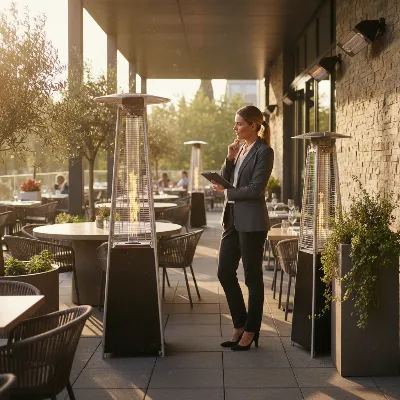 A restaurant owner thoughtfully considering different commercial patio heaters for their outdoor dining space, observing layout and power sources.
Types of Commercial Patio Heaters
Commercial patio heaters come in various forms, each offering distinct advantages and considerations. Understanding these types is the first step in making an informed decision for your restaurant.
Propane Patio Heaters
|
Our Picks for the Best Patio Heater in 2026
As an Amazon Associate I earn from qualifying purchases.
|
||
| Num | Product | Action |
|---|---|---|
| 1 | EAST OAK 55,000 BTU Propane Patio Heater with Round Table & Stainless Steel Burner, Outdoor Heater with Wheels, Ideal For Large Patios, Gardens, Outdoor Events, and Commercial Use, Bronze |

|
| 2 | Amazon Basics 46,000 BTU Portable Outdoor Propane Patio Heater with Wheels, Commercial & Residential with Water Tank, Adjustable Heat Output, 9-Foot Radius, Slate Gray, 32.1"L x 32.1"W x 91.3"H |
|
| 3 | 50,000 BTU Patio Heater - Propane Patio Heater with Sand Box, Double-Layer Stainless Steel Burner, Round Table Design Space Heater, Outdoor Heaters with Wheels for Garden and Patio, Brown |
|
| 4 | VEVOR 50000BTU Propane Patio Heater for Outdoor Use, Tall Hammered With Round Table Design, Metal Burner and Wheels, Fixed Flame Heater for Party, Backyard, Garden, Bronze |
|
| 5 | Patio Heater for Outdoor Use, Infrared Electric Outdoor Heater, 1500W Instant Heating, 60-Degree Oscillation, 9 Heat Levels, 9H Timer, Remote, for Garage, Backyard, Large Room, Indoor, 32.2", White |
|
| 6 | EAST OAK 50,000 BTU Patio Heater for Outdoor Use With Round Table Design, Double-Layer Stainless Steel Burner and Wheels, Outdoor Patio Heater for Home and Commercial, Bronze, 31.9" x 31.9" x 86.6" |
|
| 7 | 50,000 BTU Patio Heater - Propane Patio Heater with Sand Box, Double-Layer Stainless Steel Burner Space Heater, Outdoor Heaters with Wheels, Used for Garden, Patio and Residential, Brown |
|
| 8 | EAST OAK One-Hand Ignition Patio Heater with Enhanced Burner Head, 50,000 BTU Propane Outdoor Heater, One-Person Install, Round Table Design for Porch, Garden, Balcony, Backyard |
|
| 9 | EAST OAK 50,000 BTU Patio Heater with Sand Box, Table Design, Double-Layer Stainless Steel Burner, Wheels, Triple Protection System, Outdoor Heater for Home and Residential, Pinecone |
|
| 10 | EAST OAK 50,000 BTU Patio Heater for Outdoor Use with Round Table Design, Double-Layer Stainless Steel Burner, Wheels, Triple Protection System, Outdoor Heater for Home and Residential, Black |
|
Propane patio heaters are a popular choice due to their portability and immediate heat delivery. These freestanding units, often recognizable by their tall, mushroom-shaped reflectors or pyramid designs, offer powerful heat output, typically ranging from 40,000 to 46,000 BTUs, capable of warming areas up to 225 square feet. They are relatively easy to set up, requiring only a standard propane tank, making them ideal for restaurants that need flexible seating arrangements or temporary heating solutions without permanent installation.
However, propane heaters come with certain disadvantages. They require frequent tank changes, which can be an operational hassle and contribute to higher running costs compared to natural gas. Their bulkier nature can take up valuable floor space, and as they use combustible fuel, strict safety protocols regarding ventilation and clearance from combustible materials are crucial. Propane units are generally not suitable for enclosed or poorly ventilated spaces due to the risk of carbon monoxide accumulation.
Natural Gas Patio Heaters
For restaurants seeking a permanent and cost-effective heating solution, natural gas patio heaters are an excellent investment. These units are directly connected to your restaurant’s natural gas line, providing a constant and reliable heat source without the need for tank refilling or replacement. While the initial installation is more involved, requiring professional gas line setup and often permits, the long-term operating costs are significantly lower than propane, making them highly economical over time.
Natural gas heaters deliver powerful and consistent warmth, ideal for creating a year-round inviting alfresco dining experience. Their fixed nature also means they free up floor space, as many models are designed for overhead installation (wall-mounted, ceiling-mounted, or post-mounted). Safety for natural gas units includes ensuring professional installation and adhering to ventilation guidelines, though they eliminate the storage concerns associated with portable propane tanks.
Electric Patio Heaters
Electric patio heaters, especially those utilizing infrared (radiant) technology, offer a clean, energy-efficient, and low-maintenance heating solution. Unlike convection heaters that warm the air, infrared units directly heat people and objects in their path, similar to the sun’s rays. This makes them incredibly efficient, as less heat is lost to wind or open air, translating to lower energy consumption and running costs over time. They produce zero emissions, making them a safe and simple choice for covered or semi-enclosed spaces where air quality is a priority, and they operate silently.
Electric heaters are available in various styles, including sleek, wall-mounted, ceiling-mounted, and freestanding models. Their discrete designs often blend seamlessly into modern aesthetics. While the upfront wiring cost for permanent installations can be higher, and they might offer a shorter heating radius than high-BTU gas heaters for very large, entirely open spaces, their precise temperature control and durability make them a preferred choice for urban settings, stylish cafes, or areas where gas is restricted. Brands like Infratech and Bromic are leaders in high-end electric infrared options.
Specialized Commercial Heating Solutions
Beyond the primary types, specialized heaters cater to specific restaurant patio configurations:
- Ceramic Radiant Heaters: These units warm people and surfaces directly, making them a smart choice for open terraces where wind would quickly dissipate warm air from traditional heaters. They focus heat where it’s needed most.
- Radiant Tube Heaters: Designed for covered high-ceiling terraces or larger enclosed spaces, these deliver broad, even heat distribution using infrared technology, effectively reducing cold spots across extended areas.
These specialized solutions often integrate advanced technology for optimal performance in challenging outdoor environments.
Comparing Commercial Patio Heater Types
Choosing the right patio heater involves weighing the pros and cons of each type against your restaurant’s specific needs. The table below provides a concise comparison to help guide your decision.
| Feature | Propane Heaters | Natural Gas Heaters | Electric Heaters |
|---|---|---|---|
| Fuel Source | Liquid Propane (LPG) | Natural Gas (NG) | Electricity |
| Heat Output | High (40,000-46,000 BTU) | Very High (23,000-115,000+ BTU) | Moderate-High (1,500-6,000 Watts/BTU equiv.) |
| Initial Cost | Low to Moderate | Moderate to High (installation dependent) | Moderate to High (installation dependent) |
| Running Cost | High (frequent tank refills) | Low (consistent, cheaper fuel) | Moderate (efficient energy use) |
| Efficiency | ~50% (heat loss to air/wind) | ~50% (heat loss to air/wind) | 65-96% Radiant (direct heating) |
| Portability | High (freestanding, on wheels) | Low (fixed installation) | Moderate (some freestanding, many fixed) |
| Installation | Easy (tank hookup) | Complex (professional gas line install) | Moderate (professional wiring for fixed) |
| Maintenance | Tank replacement, hose checks | Low (after professional install) | Very Low (minimal moving parts) |
| Safety Risks | CO, fire (combustible fuel) | CO, fire (combustible fuel) | Electrical shorts, no CO risk |
| Best Use | Flexible layouts, temporary use, open patios | Permanent setups, large covered patios | Semi-enclosed, urban areas, sleek design |
> “The choice between gas and electric ultimately comes down to your venue’s infrastructure and long-term vision. Electric infrared offers unparalleled efficiency in targeted zones, while natural gas provides robust, continuous heat for larger, fixed spaces.” – David Chen, Lead Technician, Revieweers.com
How to Choose the Right Patio Heater for Your Restaurant
Making the right choice involves a careful assessment of your specific environment and business objectives. It’s about finding a balance between performance, aesthetics, cost, and safety.
Assessing Your Restaurant’s Unique Needs
Begin by accurately determining the coverage area you need to heat. Measure the square footage of your patio, considering any overhead structures. Heat output is typically measured in BTUs for gas heaters and Watts for electric. A common guideline is 46,000 BTUs for roughly 200-225 square feet. Your operational frequency is also key; if your patio is busy every night, investing in a highly efficient and low-running-cost solution like natural gas or electric infrared will yield greater long-term savings. Factor in your budget, weighing the upfront purchase and installation costs against the ongoing running expenses. Sometimes, a higher initial investment in a more efficient system translates to substantial savings over time.
Matching Heater Type to Your Space
The layout and characteristics of your outdoor space heavily influence the ideal heater type.
- Open Patios: For expansive, fully open areas with good ventilation, powerful freestanding propane or natural gas units are often effective. Consider pyramid flame heaters for added visual appeal.
- Semi-Enclosed Patios or Covered Terraces: Electric infrared heaters are excellent here, as they heat objects and people directly, minimizing heat loss to breezes, and pose no carbon monoxide risk in partially confined spaces. Wall or ceiling-mounted electric units also save valuable floor space. Radiant tube heaters can effectively cover long, high-ceilinged areas.
- Urban Settings/Sidewalk Cafes: Electric heaters are frequently preferred in urban environments due to their zero emissions, quiet operation, and ability to be mounted discreetly without obstructing pedestrian flow.
Consider how the heater’s aesthetic preferences align with your restaurant’s brand. Do you want a visible flame for ambiance, or a minimalist design that blends into the background?
Essential Features and Safety Standards
Prioritize heaters with robust safety features. Look for models with automatic shut-off mechanisms that activate if the unit tilts or overheats. Integrated tilt sensors are critical for freestanding models. Reliable ignition systems, such as electronic or piezoelectric, ensure easy and safe startup. Always verify that heaters carry recognized safety certifications like CSA (Canadian Standards Association) or ULC (Underwriters Laboratories of Canada) markings, indicating they meet rigorous safety standards. For durability in a commercial setting, opt for units constructed from high-quality, weather-resistant materials like stainless steel or aluminum, which can withstand continuous outdoor exposure and high traffic.
Leading Commercial Patio Heater Brands and Models
The commercial patio heater market offers a range of reputable brands known for their performance, durability, and innovation.
- Bromic Heating: A top-tier brand, Bromic is renowned for its Platinum and Tungsten Smart-Heat series. These high-end electric and gas infrared heaters are praised for their sleek designs, superior heating efficiency, and advanced features like wind resistance and smart system controls, making them a favorite for upscale restaurants and demanding environments.
- Infratech: Another leader in the high-end electric infrared segment, Infratech heaters are known for their energy efficiency, low-profile designs, and customizable aesthetics. They provide precise, consistent warmth by directly heating objects, making them an excellent choice for modern, eco-conscious establishments.
- Daygas: Offering a diverse product line, Daygas presents solutions like Solis Electric Heaters for sleek urban settings, Lodos Gas Unit Heaters for semi-enclosed spaces, and DSR Ceramic Radiant Heating for open terraces, showcasing versatility for various restaurant needs.
- Sunpak and Sunglo: These brands offer a wide variety of commercial patio heaters, including both electric and gas models, providing reliable performance and a good range of options for different fuel types and installation needs.
- Popular Freestanding and Pyramid Models: For more budget-friendly or highly portable options, brands like Amazon Basics, Hiland, Pamapic, East Oak, and Fire Sense offer reliable propane heaters, with Fire Sense being particularly noted for its stylish pyramid flame designs that add an attractive visual element to patios. The AmazonBasics Commercial Patio Heater is frequently cited for its powerful 46,000 BTU output and sturdiness.
When considering specific models, evaluate their BTU or wattage output, coverage area, material quality (e.g., stainless steel for durability), and integrated safety features to ensure they align with your restaurant’s demands and local regulations.
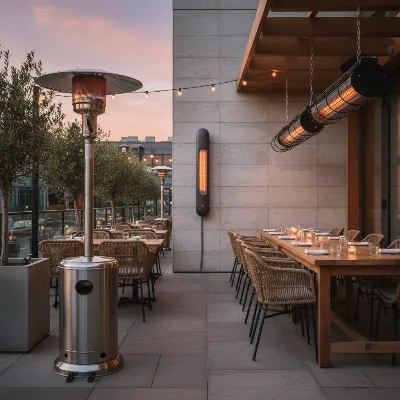 A selection of high-performance commercial patio heaters for restaurants, showcasing different fuel types and mounting options on a modern restaurant patio.
Safe Operation and Maintenance for Longevity
Ensuring the safety of your guests and staff while maximizing the lifespan of your commercial patio heaters requires strict adherence to operational guidelines and a proactive maintenance schedule.
Critical Safety Guidelines
Safety is paramount when operating any commercial heating equipment.
- Placement: Always position heaters on a stable, level surface to prevent tipping. Maintain adequate clearances from all combustible materials (umbrellas, awnings, tablecloths, decorations, walls) – typically a minimum of 3 feet (1 meter) around and above the heating element. Heaters must never obstruct fire exits, pathways, or firefighting equipment, and should be properly distanced from building air intakes. Avoid placing them near the edge of elevated platforms.
- Ventilation: Patio heaters are designed for outdoor use ONLY. Never use them indoors or within fully enclosed structures due to the severe risk of carbon monoxide (CO) poisoning. If used in a sheltered area, specific ventilation requirements apply: the shelter must either have walls on all sides but no overhead cover, an overhead cover with no more than two parallel or right-angle side walls, or an overhead cover and three side walls, provided 30% of the perimeter remains permanently open.
- Propane Cylinder Handling and Storage: Propane cylinders must always be stored upright, outdoors, in a well-ventilated, secured area (e.g., a locked cabinet or fenced enclosure) away from direct sunlight, heat sources, operating heaters, and smoking areas. Never store cylinders indoors. When moving portable propane heaters, ensure the fuel supply is properly shut off and the unit is cool. Check hoses and connections regularly for leaks using a soapy water solution; if bubbles appear, do not use the heater until the leak is fixed.
- Electrical Safety: For electric heaters, plug them directly into appropriate, grounded receptacles. Never use multiplug adapters or unapproved, damaged extension cords. Ensure all electrical installations are done by a qualified professional and comply with local electrical codes.
- Staff Training: Educate all staff members on the safe operation, proper shutdown procedures, how to move portable units, basic leak detection for gas models, and emergency protocols.
- Fire Extinguishers and CO Alarms: Keep easily accessible fire extinguishers in the patio area and ensure smoke and carbon monoxide alarms inside the building are functional, especially if heaters are used near indoor spaces or in partially enclosed structures.
Maintenance Tips to Extend Lifespan
Regular maintenance can significantly prolong the life and efficiency of your commercial patio heaters.
- Regular Cleaning: Keep heating elements, reflectors, and surfaces free from dust, debris, and grease. A clean heater operates more efficiently and reduces fire hazards. Use a soft cloth and mild detergent.
- Inspections: Periodically inspect all components. For gas heaters, check hoses, regulators, and connections for cracks, wear, or damage. For electric heaters, inspect power cords and heating elements for any signs of fraying or damage.
- Winter Storage: Before storing heaters for the off-season, thoroughly clean them. For propane units, disconnect and store cylinders separately and safely outdoors. If storing the heater indoors, ensure no propane tank is attached. Cover units with weather-resistant covers to protect them from the elements and prevent rust or corrosion.
- Professional Servicing: Schedule annual professional inspections and servicing, especially for natural gas and permanently installed electric units. Qualified technicians can identify and address potential issues before they become costly repairs or safety hazards.
By embedding these safety and maintenance practices into your restaurant’s operations, you ensure a warm, inviting, and secure outdoor dining experience for years to come.
Conclusion
The investment in the best commercial patio heaters for your restaurant in 2026 is more than just about warmth—it’s about extending your season, enhancing the guest experience, and solidifying your bottom line. From the flexible portability of propane to the long-term cost-effectiveness of natural gas, and the clean, efficient radiance of electric infrared, the market offers sophisticated solutions tailored to every restaurant’s unique needs. By carefully assessing your space, understanding fuel options, prioritizing safety, and committing to regular maintenance, you empower your establishment to thrive year-round.
Improve your outdoor space from a seasonal afterthought into a vibrant, welcoming hub that consistently draws guests, no matter the forecast. What step will you take today to ensure your restaurant’s patio is ready for every season?
Frequently Asked Questions
How many BTUs do I need for my restaurant patio?
The required BTU (British Thermal Unit) output depends on the size of your patio and the desired temperature increase. A general rule of thumb for open outdoor spaces is to aim for approximately 40,000 to 46,000 BTUs to comfortably heat an area of 200-225 square feet. For larger or more exposed patios, multiple heaters or higher BTU units may be necessary.
Are electric patio heaters truly more efficient than gas?
Yes, electric infrared patio heaters are generally considered more efficient than traditional gas heaters in terms of energy conversion. While gas heaters warm the surrounding air (much of which can be lost to wind), infrared electric heaters directly warm people and objects, resulting in less wasted energy and often lower running costs for the heat delivered.
Can I use a residential patio heater for my restaurant?
It is strongly recommended against using residential patio heaters for commercial establishments. Commercial-grade heaters are built to withstand continuous, heavy use, offer larger coverage, and often have more robust safety features required for public spaces. Residential units may not meet local commercial safety codes or provide sufficient heating for a restaurant patio.
What are the most common safety mistakes with patio heaters?
Common safety mistakes include using heaters indoors or in poorly ventilated enclosed spaces, placing them too close to combustible materials (umbrellas, awnings), failing to secure propane tanks, neglecting to check for gas leaks, and leaving heaters unattended. Always follow manufacturer instructions and local safety regulations.
How often should propane tanks be replaced in a commercial setting?
The frequency of propane tank replacement depends on the heater’s BTU output and how often it is used. A standard 20-pound propane tank typically lasts about 10 hours of continuous operation at maximum output for a 40,000-BTU heater. For busy restaurants, this means tanks may need to be replaced daily or even multiple times a day.
Frequently Asked Questions
How many BTUs do I need for my restaurant patio?
For open outdoor spaces, aim for approximately 40,000 to 46,000 BTUs to comfortably heat an area of 200-225 square feet. Larger or more exposed patios may require multiple heaters or higher BTU units to achieve the desired temperature increase.
Are electric patio heaters more efficient than gas models?
Yes, electric infrared patio heaters are generally more efficient than traditional gas heaters in terms of energy conversion. Infrared units directly warm people and objects, minimizing heat loss to wind and often resulting in lower running costs for the heat delivered compared to gas heaters that warm the air.
Can residential patio heaters be used in a restaurant setting?
It is strongly recommended against using residential patio heaters for commercial establishments. Commercial-grade heaters are built for continuous, heavy use, offer larger coverage, and feature more robust safety mechanisms required for public spaces. Residential units may not meet local commercial safety codes or provide sufficient heating for a restaurant patio.
What are common safety mistakes when operating patio heaters?
Common safety mistakes include using heaters indoors or in poorly ventilated enclosed spaces, placing them too close to combustible materials (e.g., umbrellas, awnings), failing to secure propane tanks, neglecting to check for gas leaks, and leaving heaters unattended. Always follow manufacturer instructions and local safety regulations, maintaining a minimum 3-foot clearance from combustibles.
How often should propane tanks be replaced for commercial use?
The frequency of propane tank replacement depends on the heater's BTU output and usage. A standard 20-pound propane tank typically lasts about 10 hours of continuous operation at maximum output for a 40,000-BTU heater. For busy restaurants, this means tanks may need to be replaced daily or even multiple times a day.
Choose the Right Commercial Patio Heater
Selecting the ideal commercial patio heater for your restaurant involves assessing your space, understanding fuel options, and prioritizing safety features to ensure year-round comfort and profitability.
Measure your patio's square footage and consider overhead structures to determine the required heat output, typically 40,000-46,000 BTUs for 200-225 sq ft. Evaluate your operational frequency and budget, weighing upfront costs against long-term running expenses for efficiency.
For open patios, powerful freestanding propane or natural gas units are effective. Semi-enclosed or covered terraces benefit from electric infrared heaters due to direct heating and no carbon monoxide risk. Urban settings often prefer electric for zero emissions and discreet mounting.
Look for heaters with automatic shut-off mechanisms, integrated tilt sensors, and reliable ignition systems. Verify safety certifications like CSA or ULC. Opt for units made from high-quality, weather-resistant materials like stainless steel for durability in commercial settings.
Get our weekly buyer guide
Practical specs, not advice. Unsubscribe anytime.

This guide was super helpful when we were looking to upgrade our restaurant’s patio heating. We ended up choosing a natural gas overhead heater, and the difference in durability compared to our old units is night and day. It’s fantastic not having to worry about refilling propane tanks constantly, which saves us a ton of time and hassle during busy shifts. Definitely recommend considering the natural gas option if you have the hookup.
I appreciate the focus on heavy-duty use, as we’ve burned through residential models too quickly in the past. We tried one of the pyramid flame heaters, and while it looks great, the heat output wasn’t quite as robust as I’d hoped for our larger, open-air space. It’s fine for a small, sheltered corner, but for maximizing seating capacity across the whole patio, we might need something with more power.
We just installed two of the propane-powered freestanding heaters mentioned, and they’ve been a game-changer for our bistro. Our outdoor seating used to be dead after October, but now we’re filling tables even on cooler evenings. The larger coverage area is definitely noticeable, keeping everyone comfortable without feeling like they’re sitting right on top of a heat source. So glad we invested!
Good overview of commercial options. We went with one of the electric wall-mounted units for our smaller cafe patio, and it’s been pretty reliable. The safety mechanisms are a big plus for us, especially with staff moving around. My only minor gripe is that the initial installation was a bit more involved than I anticipated, but once it was up, it’s been smooth sailing.